
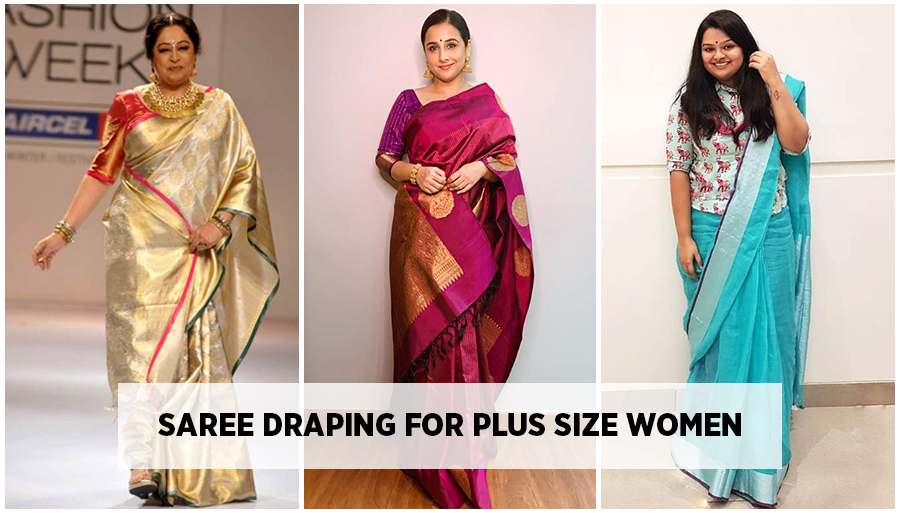
A saree flatters every body type. This is not a reassuring phrase, it is a practical fact, and it comes down to how the garment works structurally. Unlike most Western clothing that is sized to a fixed body shape, a saree is six metres of fabric that you drape, adjust, and pin to your own proportions. You control the drape, which means you control the silhouette.
For curvy and plus size women, the saree is actually one of the most versatile garments in Indian ethnic wear precisely because of this adaptability. The right fabric falls with your body rather than against it. The right colour and draping technique creates a long, unbroken vertical line that is universally flattering. Explore the full range of Indian saree styles and you will find options that work specifically for your figure.
This guide covers every element of saree selection and draping for curvy and plus size women, fabrics, colours, prints, draping technique, blouse styles, and occasion-specific recommendations.
Which Saree Is Best for Plus Size Women: Quick Answer
The best sarees for plus size and curvy women have these characteristics:
- Lightweight fabric, georgette, chiffon, soft net, or tissue silk
- Thin or minimal border, no wide contrasting borders at the hem
- Dark or deep solid colour, navy, wine, maroon, deep green, black
- Small prints or vertical patterns, no large horizontal motifs
- Nivi draping style, clean front pleats, pallu over left shoulder
Sarees to avoid: heavy silk with wide zari borders, large floral prints with wide repeat patterns, horizontal striped borders, and stiff cotton fabrics that add bulk at the waist.
Best Saree Fabrics for Curvy and Plus Size Women
Fabric determines how a saree behaves on the body more than any other factor. Heavy fabrics add physical bulk and create a stiff silhouette that emphasises width. Lightweight fabrics fall with gravity, creating a fluid drape that skims the body and creates natural vertical lines. For curvy figures, those vertical lines are the visual tool that creates the appearance of a longer, more defined silhouette.
Georgette is the top recommendation. Georgette sarees have a slight crinkle texture and a semi-opaque quality that drapes in smooth, flowing folds. The fabric moves beautifully when you walk and does not cling to the body or reveal shape in an unflattering way. It is available across all price points and is equally appropriate for casual and formal occasions.
Chiffon is the lightest option and creates the most fluid, graceful drape. Chiffon sarees are particularly effective for curvy women because the sheer, layered quality of the fabric creates a visual softness rather than definition, the silhouette reads elegant and flowing rather than form-fitted. Best suited for evening and party occasions.
Soft net with minimal embellishment is another excellent choice. Net sarees with a lightweight base layer drape cleanly and the mesh texture adds visual interest without adding bulk. Net sarees are particularly popular for festive and reception occasions for curvy women because the fabric holds its shape through an event without bunching or shifting.
Linen sarees are worth considering for daily wear and casual occasions. Linen sarees are lightweight, breathable, and have a natural texture that skims the body without clinging. They drape more easily than cotton and stay comfortable through long wear. Pairing a linen saree with a kurti instead of a blouse creates a relaxed, well-proportioned casual look.
Fabrics to avoid: Thick Banarasi silk with stiff brocade weave, heavy cotton that adds bulk at the waist, and padded or structured fabrics that create an irregular silhouette. These fabrics are beautiful garments but their weight and stiffness work against the fluid, slimming drape that benefits curvy figures.
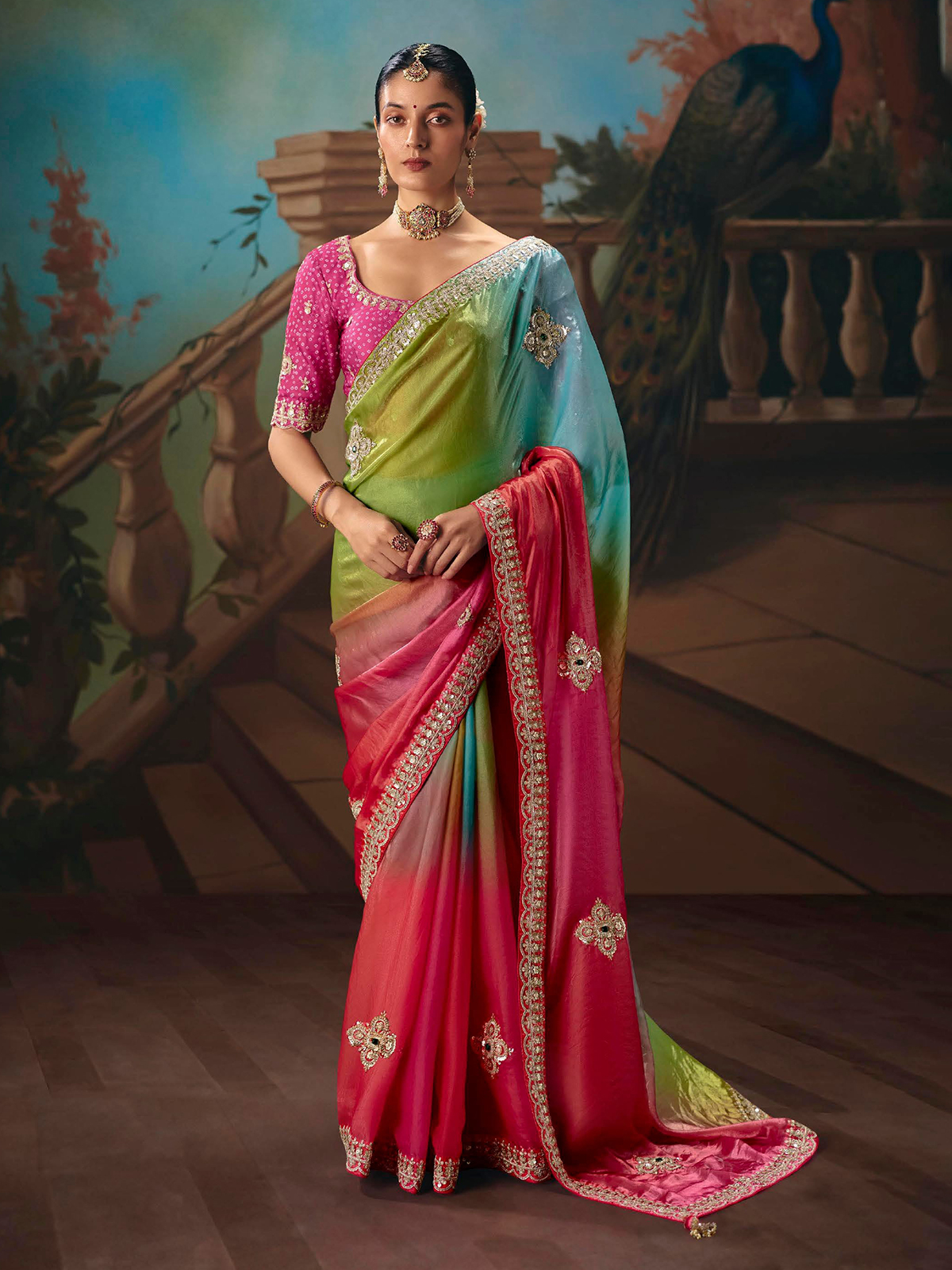
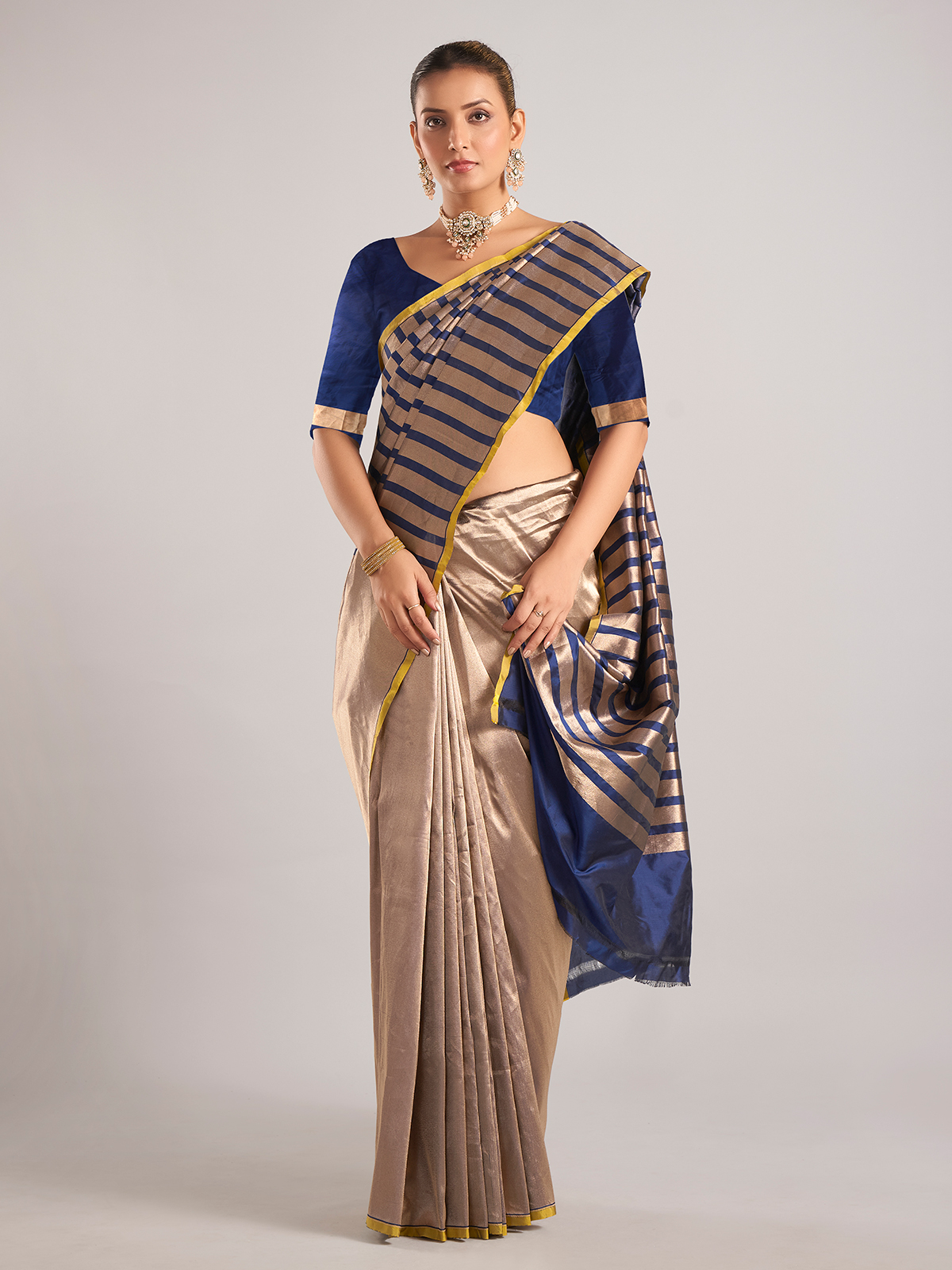
Multicolor Shaded Fancy Tissue Silk Saree
Tissue silk, fluid fall, minimal visual weight
Borders, Prints and Patterns: What Works for Curvy Figures
Choose a Thin Border
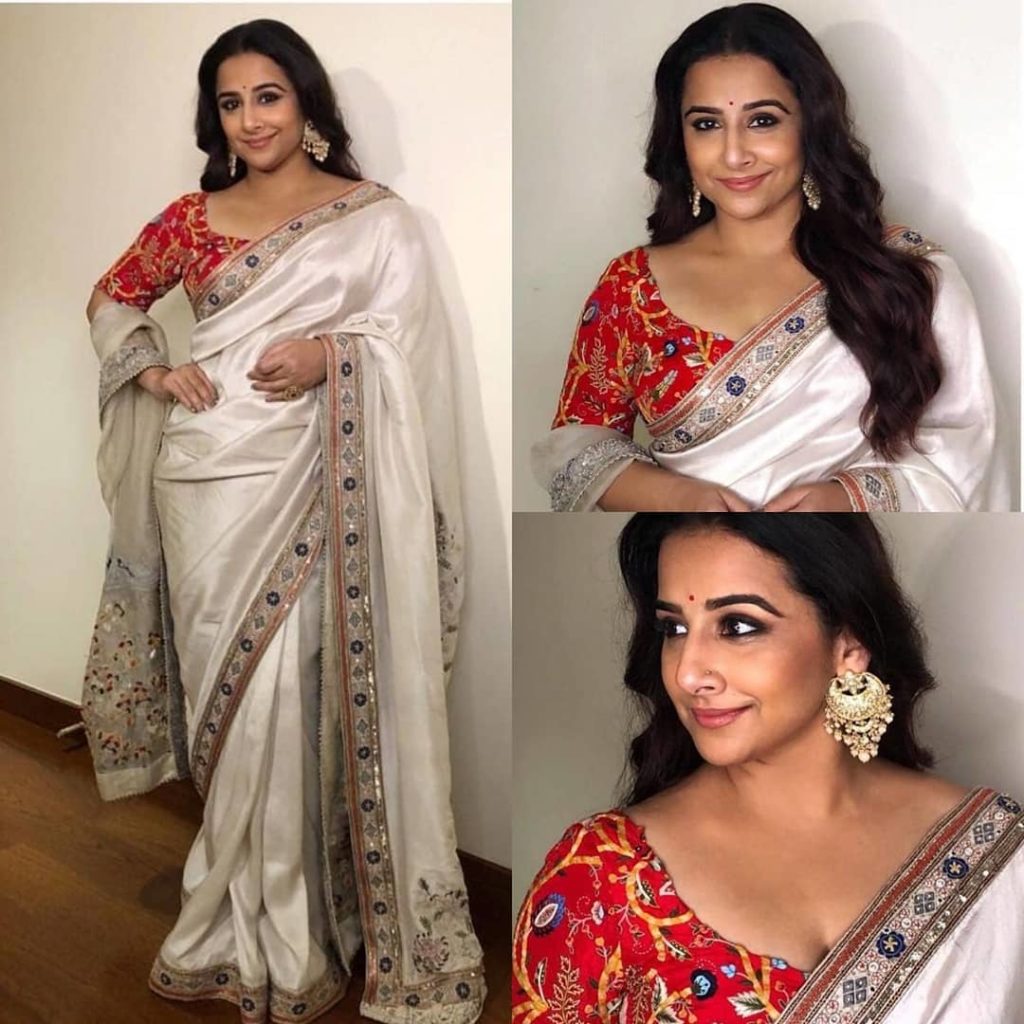
The border of a saree runs along the hem and creates a horizontal line at the bottom of the silhouette. A wide, high-contrast border creates a strong horizontal visual band that the eye naturally follows, cutting the vertical line at exactly the wrong point. A thin border, 1 to 2 cm, provides the clean finishing line of a bordered saree without the horizontal emphasis. For curvy women, a border in the same colour family as the saree body is significantly more flattering than a high-contrast contrasting border.
Small Prints and Vertical Patterns
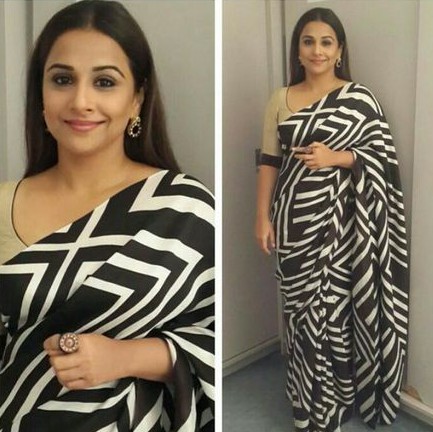
Printed sarees with small, all-over motifs work well for curvy figures because the print distribution is even and does not create visual concentration at any one point. For formal or office occasions, a saree with a small geometric or abstract print in a solid blouse reads polished and well put-together.
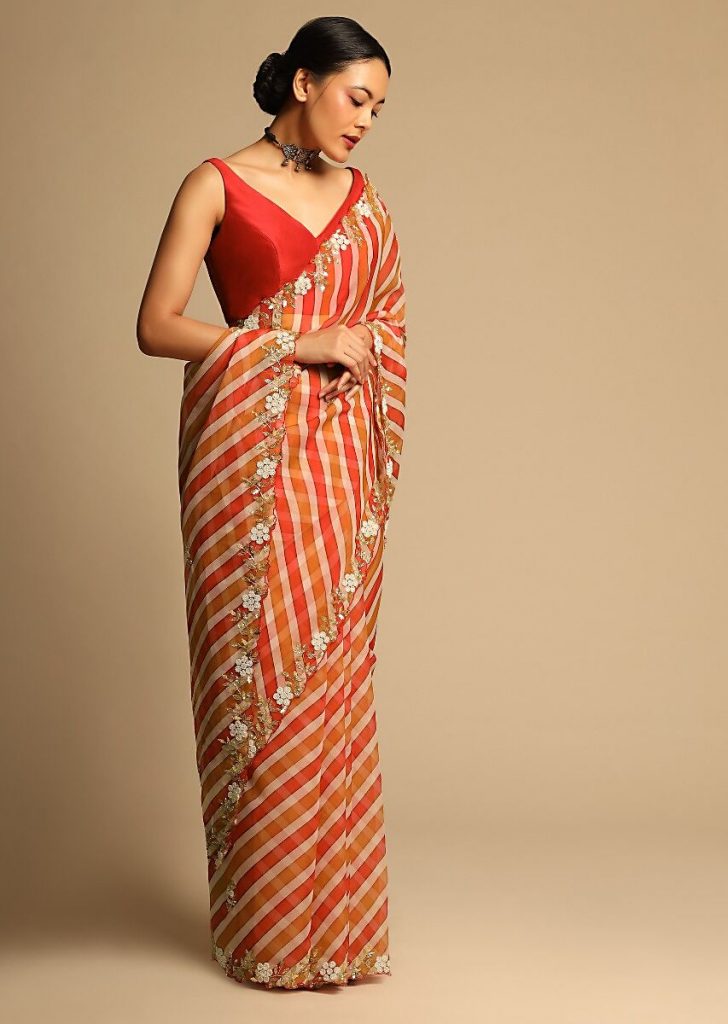
Vertical stripes are the most directly elongating pattern available in saree design. The eye follows the stripe line from top to bottom, creating a visual vertical that adds apparent height and reduces apparent width simultaneously. Even narrow vertical stripes have a meaningful effect. Keep accessories minimal when wearing a vertical stripe saree, the pattern creates enough visual interest without additional layering.
Patterns to avoid: Large floral medallion prints with wide repeat patterns, bold horizontal stripes, and wide geometric bands that run across the full width of the saree body. All of these add visual width.
Best Saree Colours for Plus Size Women
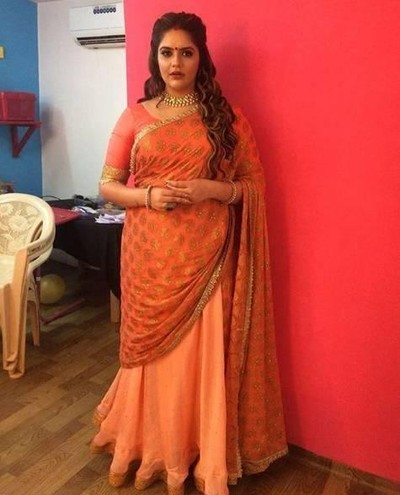
Colour is the second most powerful styling tool after fabric. Dark, deep colours absorb light rather than reflecting it, which reduces the visual definition of curves. Navy sarees, wine sarees, and maroon sarees all create a slimming visual effect for exactly this reason. When the saree and blouse are in a similar deep tone, a monochromatic pairing, the eye travels from shoulder to floor in one continuous vertical read, which is the most elongating visual possible.
Black sarees are the most powerful slimming choice but work best for evening and formal occasions rather than daytime festive events where a deeper colour in the jewel tone family, emerald, sapphire, deep plum, may be more appropriate.
Light pastels and whites are not off-limits but require more care. A pale colour in a lightweight fabric (georgette or chiffon) with a matching thin border and a well-fitted blouse in a slightly deeper tone can work beautifully. The key is avoiding contrast, the more contrast between saree and blouse or between saree body and border, the more visual interruption is created in the silhouette.
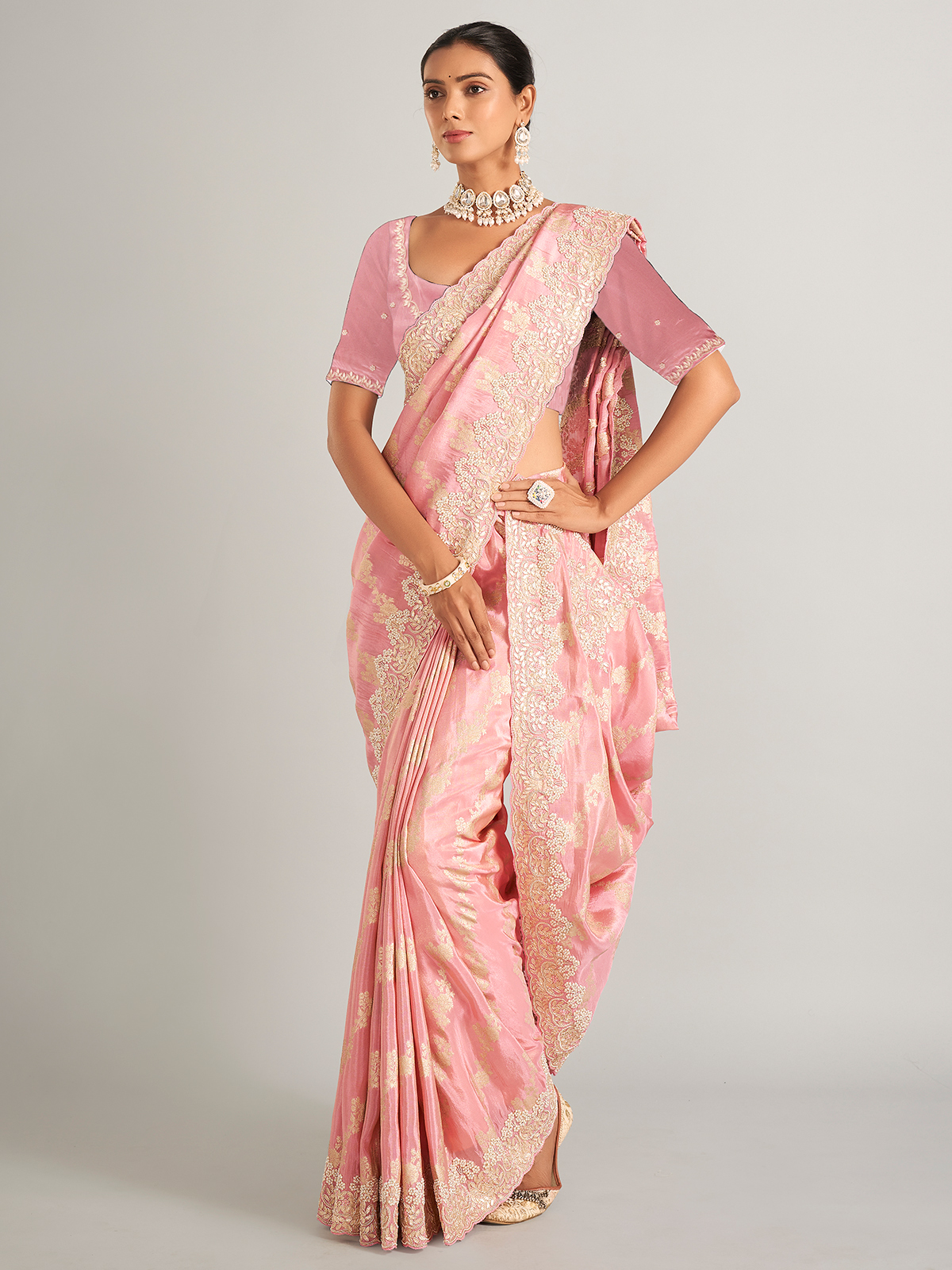
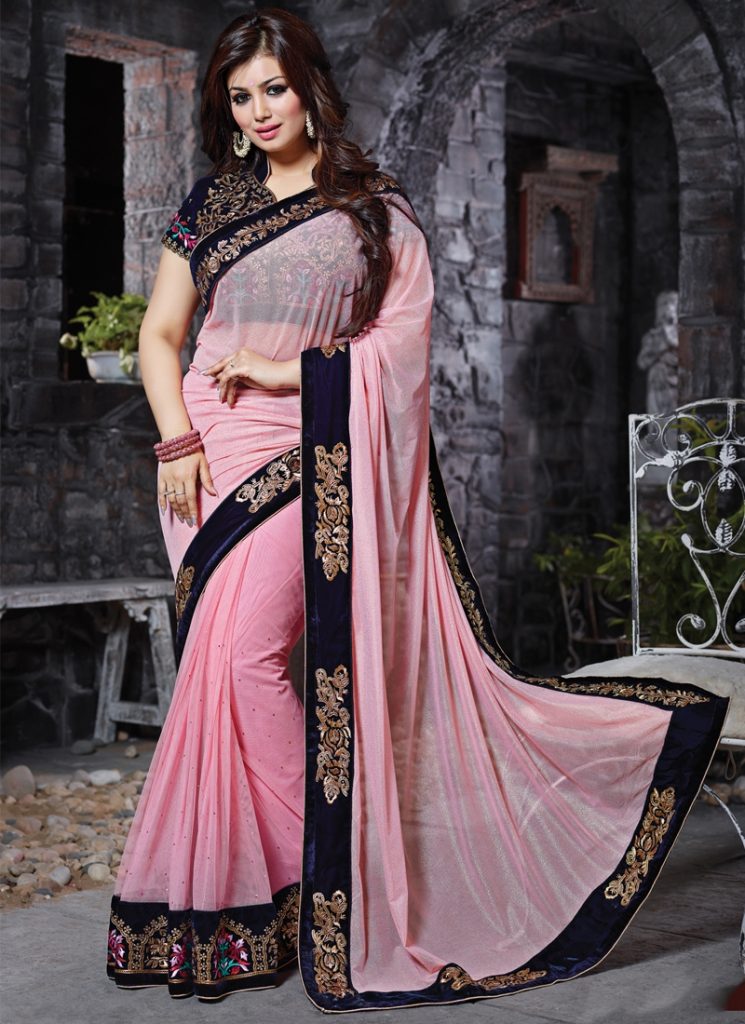
Light Pink Zari Worked Silk Saree
Medium depth with vertical zari, elegant and proportionate
Saree Draping Tips for Plus Size Women: How to Create a Slimmer Silhouette
Use the nivi draping style. The nivi drape, the standard Indian draping method with pleats at the centre front and pallu over the left shoulder, is the most flattering for curvy and plus size women. It creates two strong vertical elements simultaneously: the front pleat column and the pallu line. These verticals draw the eye from top to bottom, which is the fundamental visual trick for elongating any figure. More complex draping styles that add fabric across the front or create layered visual elements at the torso work against this. For step-by-step pallu draping guidance, read our pleated pallu draping guide.
Keep front pleats narrow and pointed forward. Broad, fanned front pleats add visual width at the abdomen. Narrow pleats, 2 to 2.5 inches, tucked deep and pointing straight forward create a clean, flat front that does not add any visual bulk. The fewer the pleats, the cleaner the front reads. Pin them firmly to the petticoat.
Drape the pallu in neat pleats at the shoulder. An open, trailing pallu spreads across the front of the body as you move, creating horizontal visual width at the torso. A pleated pallu pinned at the shoulder stays in position, maintains the vertical line, and does not spread across the front. This is one of the most impactful and least discussed draping adjustments for curvy figures.
Use a slim-fit petticoat. A flared petticoat adds volume at the hips and thighs, exactly the area that a curvy woman wants to minimise visually. A slim, straight-cut petticoat in a matching colour to the saree keeps the lower silhouette narrow. The petticoat should reach the ankle precisely so no gap appears at the hem.
For the complete range of draping hacks applicable to all body types, read our saree draping hacks guide.
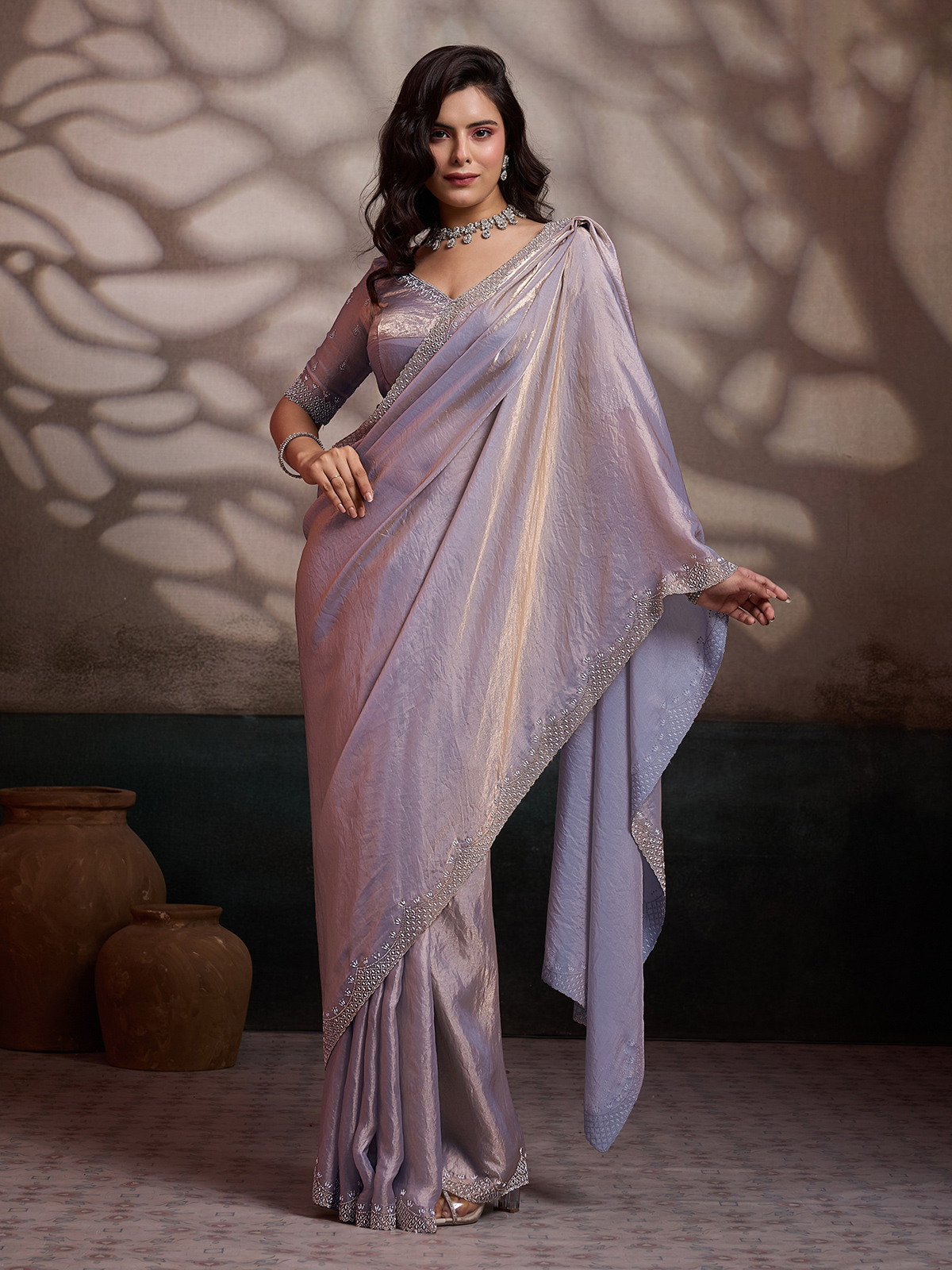
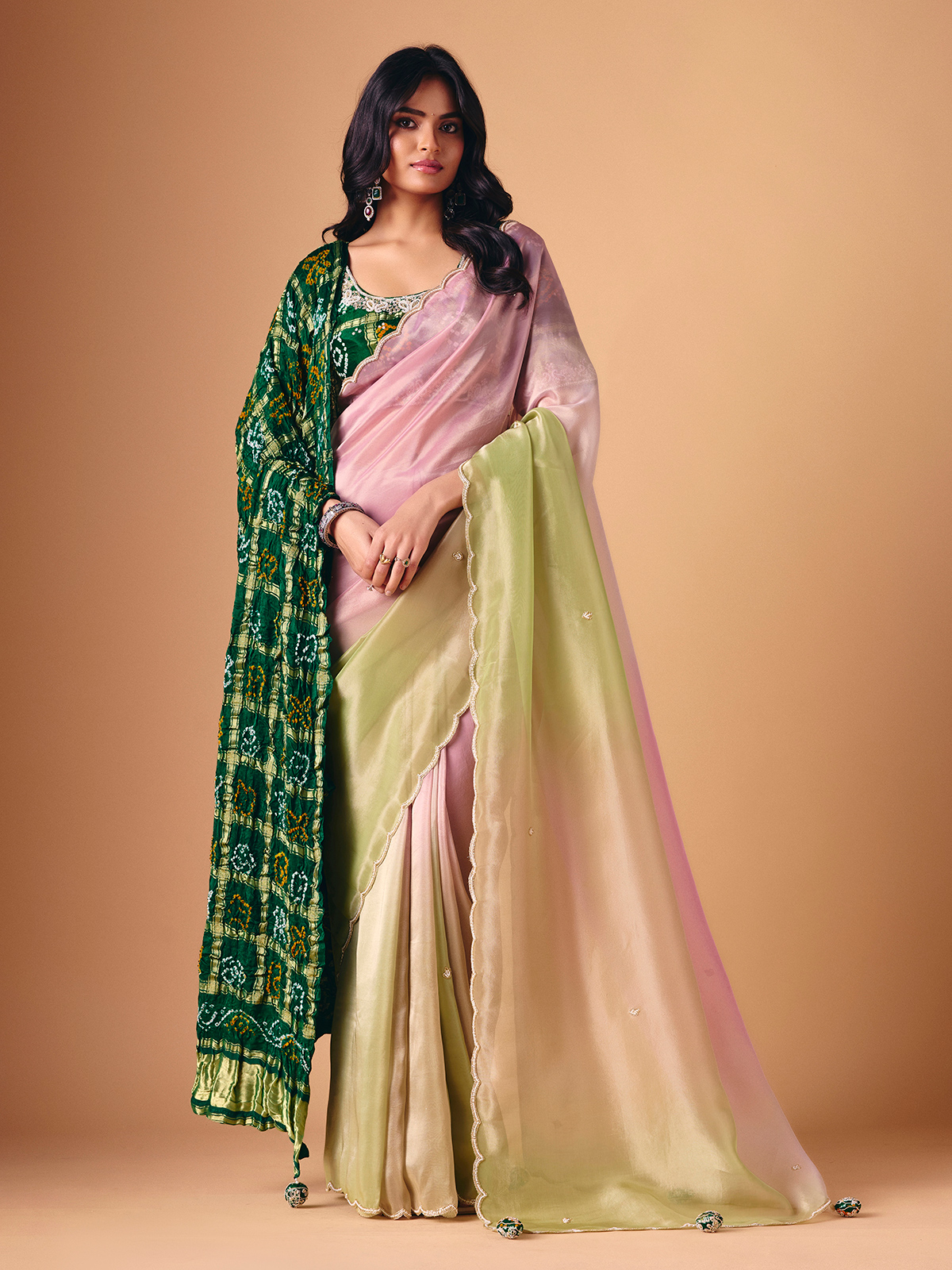
Sky Blue Satin Silk Saree. Reception Wear
Smooth satin, elongating for party and reception
Watch: Saree Draping for Plus Size Women: Tutorial
This video tutorial demonstrates the key draping techniques for plus size and curvy women, including pleat placement, petticoat positioning, and pallu draping for a clean, flattering silhouette.
Blouse Styles for Plus Size Women: Four Design Approaches
The blouse is the most customisable element of a saree look and one of the most powerful tools for creating a flattering silhouette. For curvy women, the neckline, sleeve length, and fit all affect how the overall look reads.
Sweetheart or Envelope Neckline
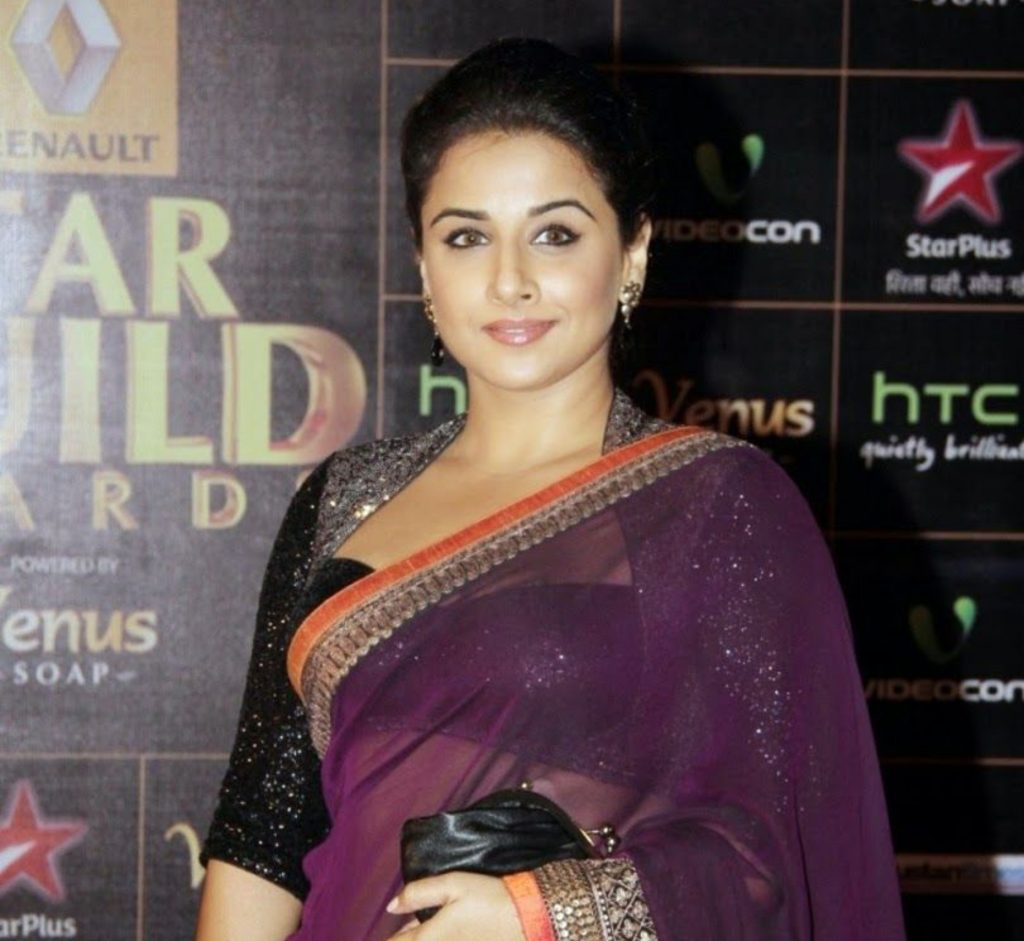
A sweetheart or envelope neckline exposes the collarbone and upper chest while framing the décolletage with a structured curve. This neckline draws the eye upward to the face and shoulder area, shifting the visual focal point away from the midriff. It covers the shoulder area naturally, which suits women who prefer modest coverage at the shoulder and arm. This is one of the most consistently flattering neckline choices for plus size women across all saree fabrics.
Sleeveless with Simple Neckline
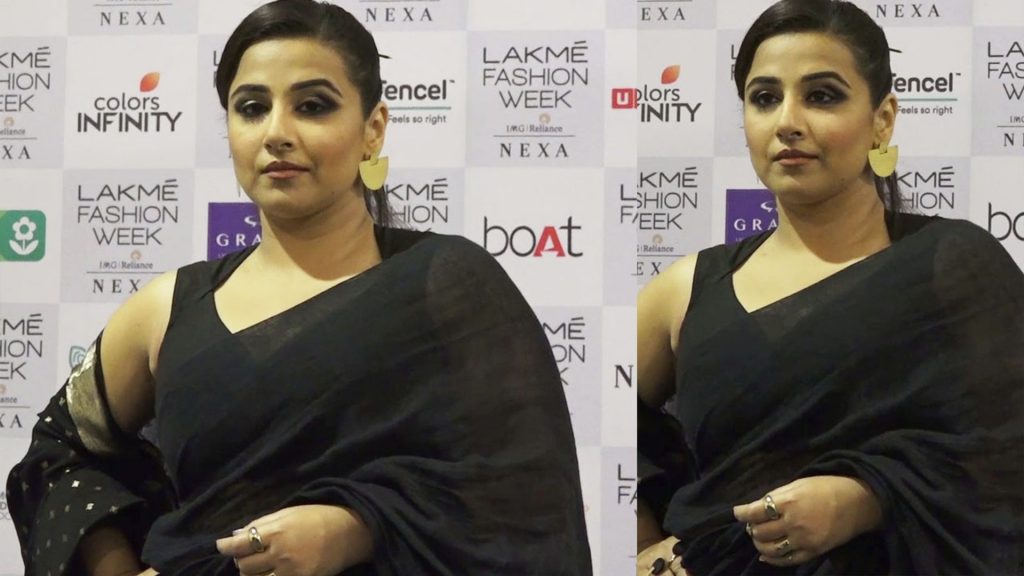
A sleeveless blouse with a simple boat neck or envelope neckline creates an open, streamlined shoulder and upper body that reads contemporary and confident. The key for plus size women is that the blouse must be properly fitted, too tight pulls uncomfortably, too loose creates bulk. A well-fitted sleeveless blouse in a dark tone matching the saree body creates a clean, uninterrupted silhouette from shoulder to saree hem.
Collar Full-Sleeve Blouse
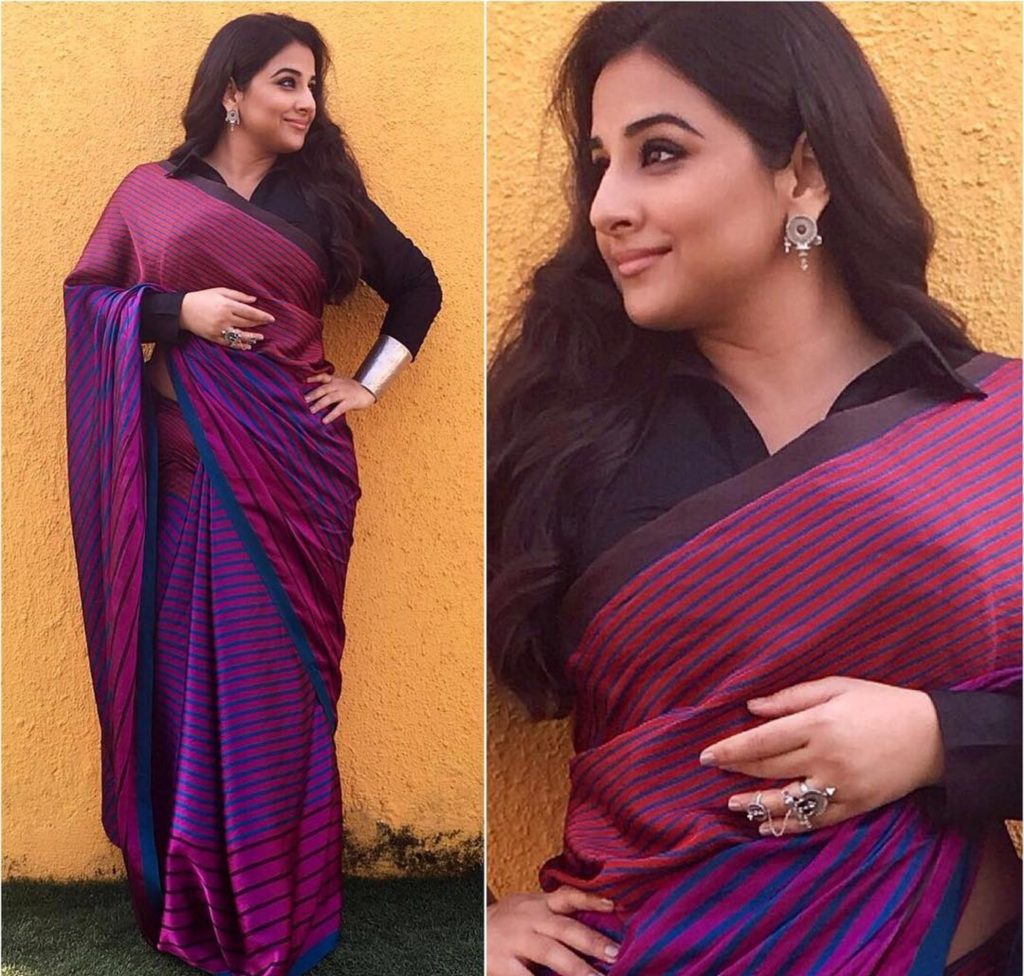
A collar full-sleeve blouse adds a touch of formality and provides full arm coverage, which many curvy women prefer for daytime and office occasions. The collar draws the eye to the face and creates a structured upper body that reads put-together and polished. This style works particularly well with plain or subtly printed sarees where the focus is on the drape rather than the blouse embellishment.
High Neck with Three-Quarter Sleeves
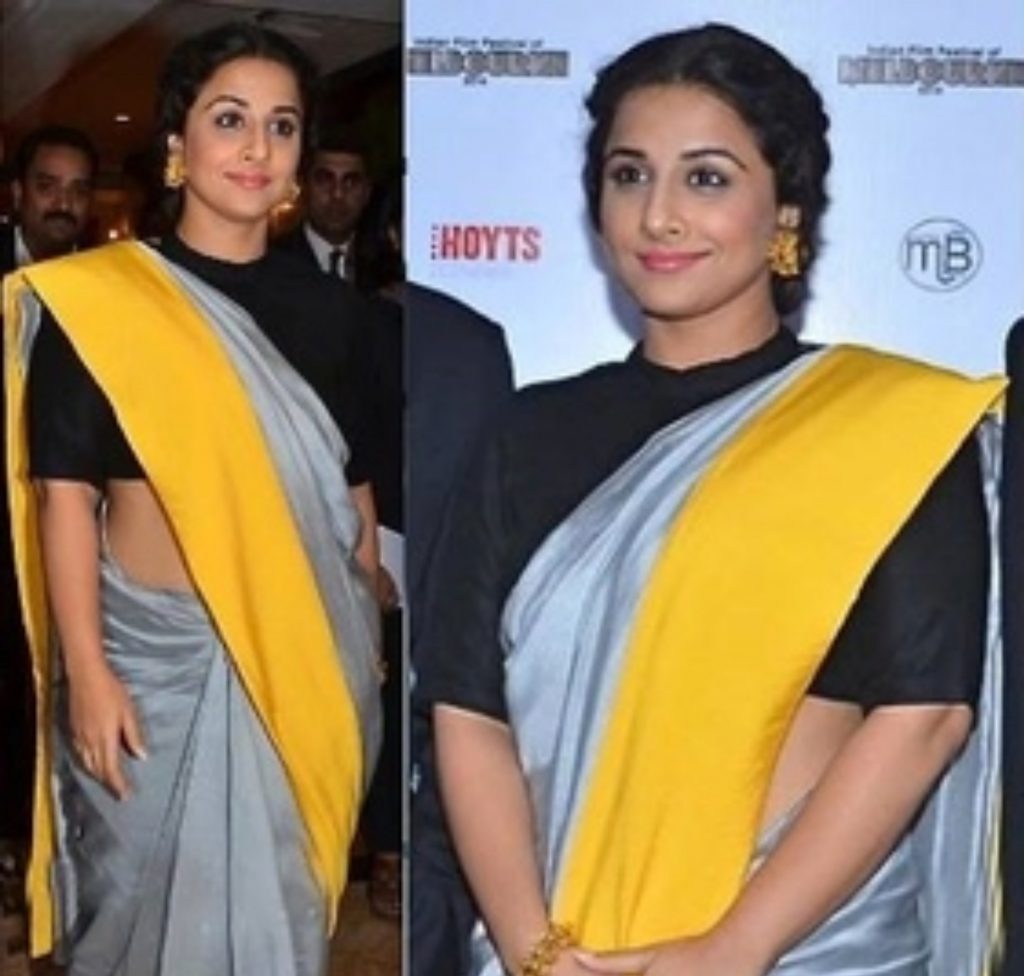
A high neck with three-quarter sleeves creates a layered, glamorous look suitable for evening events and formal occasions. The high collar creates vertical lines at the throat that elongate the neck and upper body. Three-quarter sleeves expose the lower arm and wrist, typically the most slender part of the arm, which creates a proportionate balance with the covered shoulder and upper arm. This blouse style works particularly well with rich evening fabrics like satin silk and soft silk.
Heels and Accessories for Plus Size Women in Saree
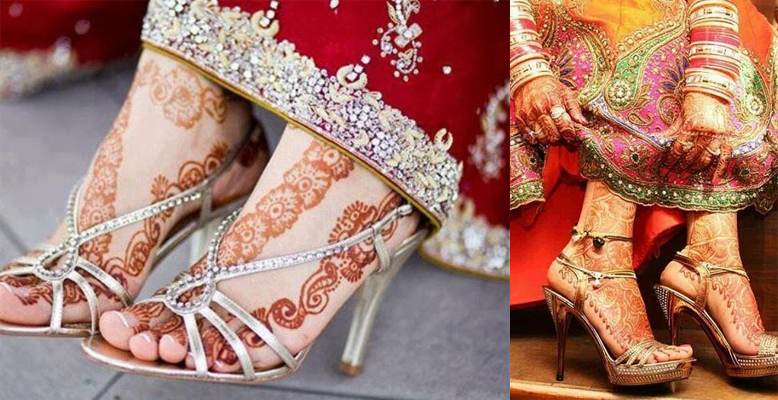
Heels: A 2 to 3 inch heel adds genuine height and changes how the saree falls from the waist. For curvy women, a block heel or a structured stiletto in a metallic shade adds both height and visual elegance. Avoid very thick platform soles, they add mass at the foot which reads as heavy. A slim block heel or a pointed stiletto in gold or silver complements the saree without adding visual weight.
Jewellery: A single long pendant necklace creates a strong vertical line at the chest that elongates the torso. Layered horizontal necklaces create width at the neckline, the opposite of what you want. Choose one focal piece, a long pendant, a statement earring, or a stack of thin bangles, and keep the rest minimal. Overloading jewellery creates a heavier overall visual that works against the clean, elongating lines of a well-draped saree.
Saree for Plus Size Women by Occasion
Wedding Saree for Plus Size Women
For weddings, the photographic context requires a saree that reads beautifully under both natural and artificial flash lighting. Deep jewel tones, sapphire, emerald, deep burgundy, and gold-toned navy, photograph with rich depth and create a strongly defined silhouette. A tissue silk or soft satin silk in these tones with a thin matching border is the most consistently flattering wedding choice for curvy women. Match the blouse to the saree body tone rather than the border, this removes the visual break at the waist that shortens and widens the figure. Browse our wedding sarees collection for options in these tones.
Party and Festive Wear
For parties, sangeet, and festive occasions, a georgette or net saree in a jewel tone with embellishment at the pallu, sequin work, stone detailing, or embroidery, creates a festive, rich look without the weight of a heavy silk. The lightweight fabric moves freely through dancing and active celebration. For more ideas on what to wear at these specific functions, read our saree styling guide for mehendi and sangeet.
Office and Daily Wear
For office wear, a plain linen or soft cotton-silk saree in a muted tone with a slim petticoat and a well-fitted blouse creates a polished, comfortable daily look. Avoid embellished or heavily printed sarees for office contexts, clean, simple sarees in muted tones read professional. Read our guide to unique saree draping styles for office-appropriate draping variations.
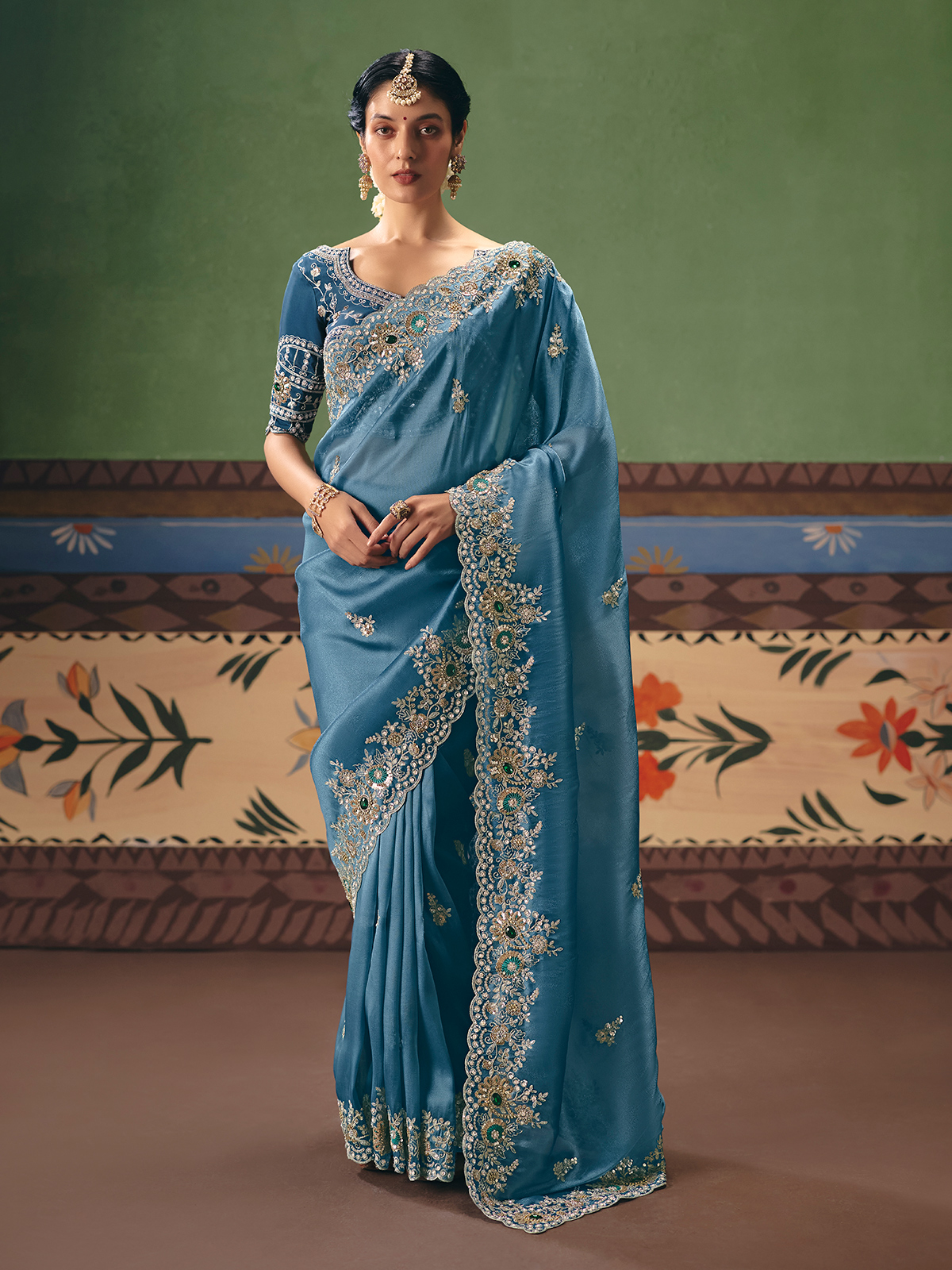
Light Blue Fancy Silk Wedding Saree
Fancy silk, structured yet fluid for wedding occasions
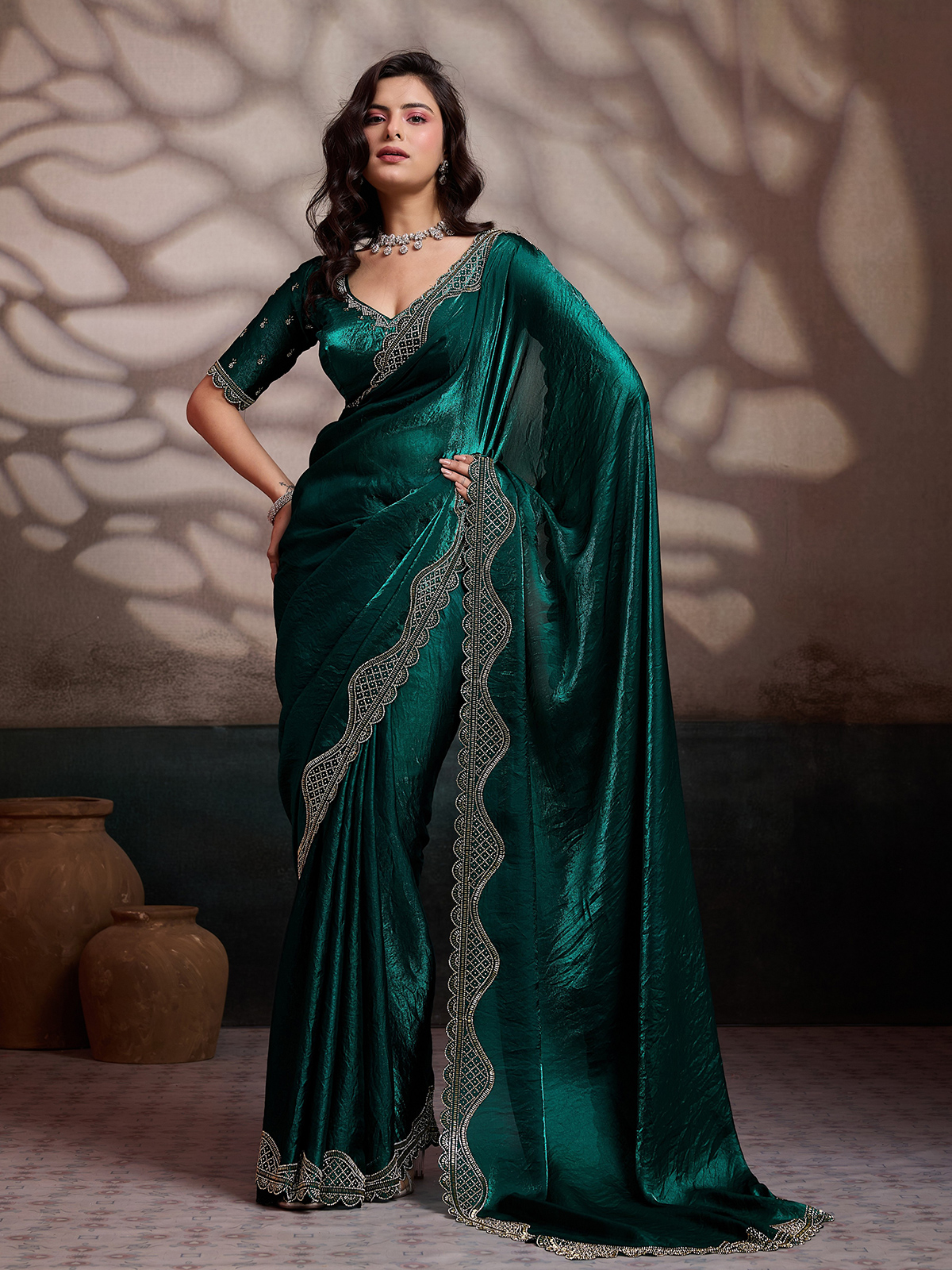
Green Wedding Satin Silk Saree. Stone Border
Rich green satin, deep jewel tone for wedding photography
Frequently Asked Questions: Sarees for Plus Size Women
Which saree fabric is best for plus size women?
Georgette is the most recommended fabric for plus size women because it drapes in clean, fluid folds that create natural vertical lines without adding bulk. Chiffon is the lightest option for evening occasions. Soft net works well for festive events. Linen and cotton-silk blends suit daily wear. The common quality across all these fabrics is weight, lighter fabrics always drape more flatteringly than heavy, stiff fabrics for curvy figures.
What colour saree makes a plus size woman look slimmer?
Dark, solid colours are the most effective. Navy, wine, deep maroon, forest green, and black all absorb light rather than reflecting it, which reduces the visual definition of curves. When the saree and blouse are in a similar deep tone, a monochromatic pairing, the eye reads a single uninterrupted vertical from shoulder to hem. Avoid high-contrast colour combinations between saree body and blouse, and between saree body and border.
How should a plus size woman drape her saree?
The nivi draping style with narrow front pleats pointing straight forward is the most flattering for curvy women. Keep the pleats tight and tucked deeply into a slim-fit petticoat. Pin the pallu in neat pleats at the shoulder rather than leaving it open. The goal is to create two strong vertical visual lines, the pleat column at the front and the pallu line at the shoulder, that draw the eye from top to bottom. For the detailed draping technique, watch the tutorial video on this page.
Can a plus size woman wear a saree with a kurti?
Yes, and it works particularly well for casual and daily occasions. Wearing a longer kurti instead of a blouse covers the midriff entirely, which many plus size women find more comfortable and flattering. A cotton or linen saree paired with a kurti in a matching or complementary colour creates a relaxed, well-proportioned look that is also practical for extended daily wear.
What blouse style is most flattering for a curvy woman?
A sweetheart or envelope neckline is consistently the most flattering blouse neckline for plus size women in a saree. It exposes the collarbone, draws the eye upward toward the face, and provides natural coverage at the shoulder and upper chest without appearing heavy or formal. The blouse fit matters as much as the design, a well-fitted blouse in a dark tone matching the saree body creates a clean, cohesive silhouette from shoulder to hem.
Explore Sarees for Every Figure at G3Fashion
A saree works for every body type when the fabric, colour, and draping are chosen thoughtfully. For curvy and plus size women, the practical formula is: lightweight fabric, thin border, dark or small-print colour, nivi drape with narrow pleats, slim petticoat, and a well-fitted blouse in a matching or complementary tone.
For body type-specific styling guidance across all Indian ethnic wear, not just sarees, read our complete styling guide for different body types and our modern saree draping styles guide for contemporary alternatives to the classic nivi drape.