
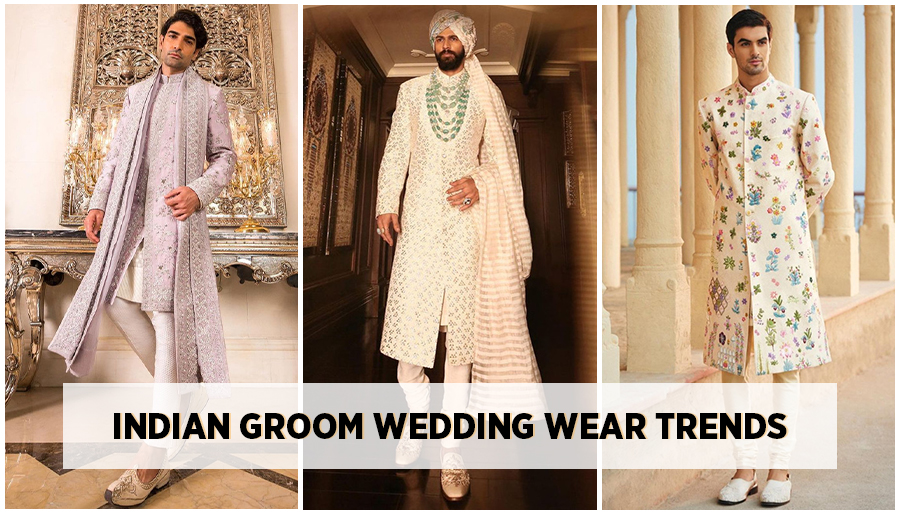
An Indian wedding is not one event — it is a sequence of five to eight functions over multiple days, and the groom needs a different outfit at each. The formality, time of day, cultural expectations and styling mood change dramatically from the casual daytime haldi to the sacred phera ceremony to the glamorous evening reception. Wearing a sherwani to every function is overdressing; wearing a kurta pajama to every function is underdressing. The groom who plans his wardrobe function by function — matching the outfit’s formality, fabric and colour to each event’s specific demands — is the groom who looks effortlessly right in every photograph.
This guide walks through every wedding function in chronological order and tells you exactly what the groom should wear at each, what fabric and colour to choose, how to coordinate with the bride and groomsmen, and what mistakes to avoid. If you need help deciding between a sherwani, coat suit, indo-western or kurta pajama at a fundamental level, read our groom outfit type decision guide first, then return here for function-specific recommendations.
What Should the Groom Wear at the Roka Ceremony?
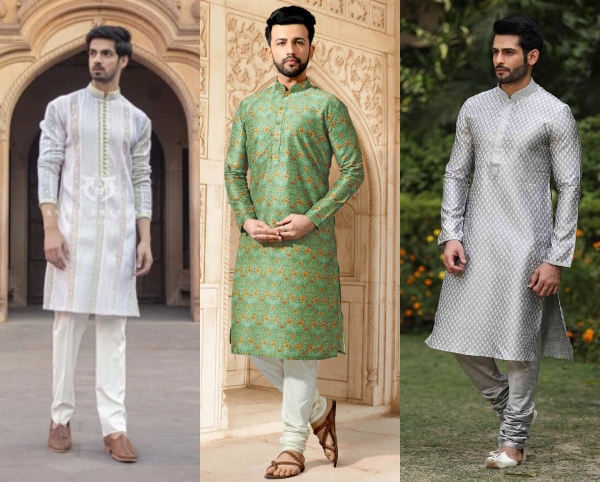
The roka is the first formal commitment — an intimate gathering of close family where the couple’s engagement is officially fixed. It is the most personal and least public wedding event, which means the groom’s outfit should be polished but understated, festive but not flashy.
Best outfit: A kurta pajama in a solid pastel or muted tone — powder blue, sage green, champagne, soft lilac or ivory — is the ideal roka choice. The simplicity of a well-fitted kurta communicates elegance without trying too hard. Add a lightweight stole or a Nehru jacket in a tonal contrast to elevate the look from everyday to ceremonial.
Fabric: Cotton silk or chanderi silk for daytime roka events. Soft silk or crepe for evening gatherings. Avoid heavy brocade or velvet — they are too formal for this intimate function.
Colour guidance: Pastels and soft neutrals photograph best at the roka because the lighting is usually natural and the setting intimate. Avoid very dark colours (black, navy) which can feel too sombre, and avoid bright saturated colours which are better saved for mehndi and sangeet.
Styling tip: Keep accessories minimal — a simple wristwatch, clean mojris or loafers, and no turban or pagdi. The roka is about the couple, not the outfit. A single statement piece like an embroidered stole or a pocket square adds just enough personality.
What Should the Groom Wear at the Engagement?
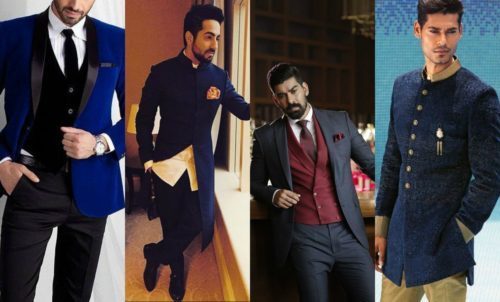
The engagement is the first semi-public event — larger than the roka, with extended family and friends, often with a formal ring exchange and stage photographs. The groom’s outfit needs to step up in formality while still leaving room for the ceremony sherwani to be the biggest fashion moment later.
Best outfit: A Jodhpuri bandhgala suit or a waistcoat set in a rich solid colour is the sweet spot — more formal than a kurta pajama, less grand than a full sherwani. A Jodhpuri in navy, wine, teal or charcoal with minimal embroidery on the collar and cuffs makes a strong engagement statement. Alternatively, a designer waistcoat set with a silk kurta and embroidered Nehru jacket creates a layered, put-together engagement look.
Fabric: Silk, raw silk or jacquard for evening engagements. Cotton silk or structured linen for daytime events. Brocade waistcoats paired with plain silk kurtas create visual depth without heaviness.
Colour guidance: Deep solids work best for engagement — navy, wine, emerald, charcoal or deep teal. These colours read as formal and photographed well on stage. Avoid wearing the exact same colour as the bride — choose a complementary shade within the same family. If the bride is in dusty pink, the groom can wear champagne or sage. If the bride is in red, the groom can wear ivory, gold or maroon.
What Should the Groom Wear at the Haldi Ceremony?
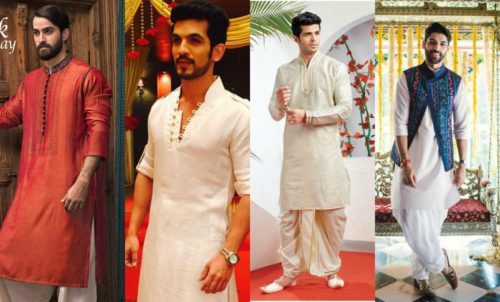
The haldi is the most casual, messy and fun wedding function. Turmeric paste will be applied directly to the groom, water will be splashed, and the entire event happens outdoors during the daytime. The outfit WILL get stained. This is not the function for designer pieces — it is the function for comfort, bright colour and a relaxed vibe.
Best outfit: A kurta pajama in yellow, white or pastel shades is the standard groom haldi outfit. Cotton silk or linen fabric handles turmeric stains better than pure silk and feels breathable in the daytime heat. A short kurta or a pathani-style kurta offers a relaxed, modern alternative to the full-length kurta.
What to avoid: Do not wear expensive or heavily embellished outfits to haldi — they will be ruined. Do not wear dark colours that clash with the bright yellow turmeric and marigold décor. Do not wear a sherwani, coat suit or any structured, formal outfit — they are out of place at this casual function.
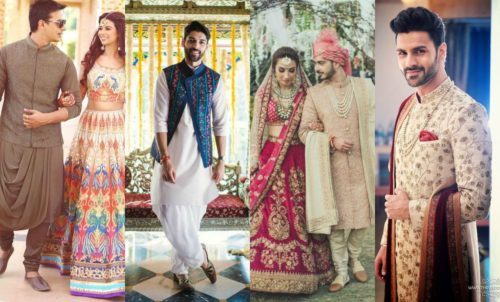
Couple coordination: Matching yellow kurtas as a couple is one of the biggest haldi trends in 2026. Both wearing the same shade of yellow — the bride in a lehenga or saree, the groom in a kurta — creates the most photographed haldi couple look. For detailed haldi outfit ideas including waistcoat sets, pathani styles and colour options, read our complete men’s haldi outfit guide.
What Should the Groom Wear at the Mehndi?

The mehndi is a vibrant, colourful pre-wedding celebration with music, henna application and dancing. It is more festive than the haldi but less formal than the sangeet. The groom’s mehndi outfit should be expressive, colourful and comfortable — this is the function where you can take creative risks with colour and print.
Best outfit: A waistcoat set in a bright colour is the most popular groom mehndi choice — it adds festive layering without the weight of a sherwani. A printed or embroidered kurta pajama in green, orange, pink, coral or turquoise also works beautifully. For grooms who want a modern edge, a floral printed Nehru jacket over a plain kurta creates a contemporary mehndi look.
Fabric: Cotton silk, georgette or light silk for daytime mehndi. Silk or brocade waistcoats for evening mehndi. Printed fabrics like bandhani, block print and digital florals are trending for mehndi in 2026.
Colour guidance: This is the one function where bright, saturated colours are expected and celebrated. Greens (to match the mehndi theme), bright pinks, oranges, yellows and even florals all work. Avoid muted or dark tones — save those for the ceremony and reception.
Styling tip: Embroidered juttis or kolhapuri sandals, a statement brooch on the jacket and a colourful pocket square complete the mehndi look. Keep jewelry minimal — a leather strap watch and a single bracelet or kara are enough.
What Should the Groom Wear at the Sangeet?
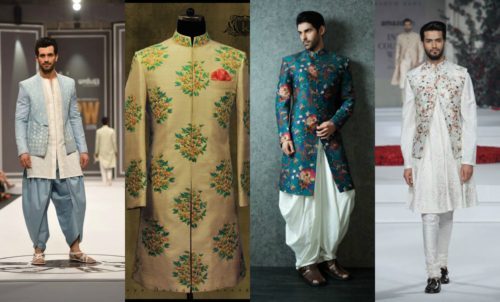
The sangeet is the evening party — music, choreographed performances, dancing and celebration under artificial lighting. This is the groom’s most fashion-forward moment before the ceremony. The outfit should be statement-making, comfortable enough for dancing and suited to evening/stage lighting.
Best outfit: A designer indo-western set, a velvet or brocade Nehru jacket over a kurta, a coat suit in a jewel tone, or a statement sherwani jacket with a more relaxed bottom. The sangeet outfit should look different from the ceremony sherwani — choose a different silhouette, colour and embellishment level. If you are wearing a classic sherwani for the ceremony, wear an indo-western or coat suit for the sangeet.
Fabric: Velvet, silk, brocade and metallic jacquard for jackets and structured pieces. Lighter silk or crepe for the kurta underneath. Fabrics with sheen or texture photograph best under sangeet stage lighting.
Colour guidance: Jewel tones — deep teal, wine, midnight blue, emerald, plum — photograph most dramatically under evening lighting. Metallics (gold, champagne, silver) create striking stage presence. Black with metallic or coloured accents is a modern sangeet choice trending in 2026.
Couple coordination: The sangeet is the function where coordinated couple outfits create the most impact — performing together in matching or complementary colours is a major 2026 trend. Coordinate colours with the bride early in the planning process. For women’s sangeet styling, see our sangeet outfit guide for women.
What Should the Groom Wear at the Wedding Ceremony?
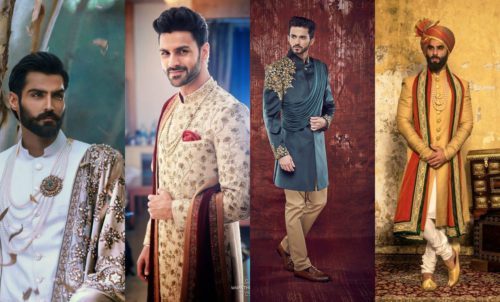
The phera ceremony is the most sacred and formal function of the entire wedding. The groom’s outfit at the ceremony carries the greatest cultural weight and will appear in the most important wedding photographs. This is where tradition meets personal style — and where the sherwani comes into its own.
Best outfit: A designer sherwani in cream, ivory, gold, maroon or champagne with heavy embroidery — zardozi, sequin, pearl or metallic thread work — is the quintessential Indian groom ceremony outfit. The sherwani should be paired with a pagdi or safa (turban), sehra (face veil), embellished mojris and a mala (garland). A three-piece or four-piece sherwani set (sherwani jacket, inner kurta, bottom and stole/dupatta) creates the most complete and regal ceremony look.
Fabric: Silk is the default ceremony fabric — it drapes with structure and richness that no other fabric matches. Velvet sherwanis are trending for winter ceremonies. Raw silk and art silk offer the sherwani structure at a more accessible price point. Brocade with woven patterns adds textural depth.
Colour guidance for 2026: Ivory and cream remain the most classic groom ceremony colours. Champagne gold and soft rose are trending for grooms who want warmth without going red. Deep maroon and wine create a traditional, royal look. Non-traditional ceremony colours like sage green, powder blue and slate grey are rising among modern grooms — though these work best at contemporary or destination weddings rather than very traditional ceremonies. For the latest trends in groom fabrics, colours and designer styles, read our groom outfit trends for 2026.
What to avoid: Never match the bride’s exact outfit shade — the groom should complement, not copy. Avoid very casual fabrics like cotton or linen for the ceremony. Avoid wearing the same sherwani you wore at the engagement or sangeet — the ceremony outfit should feel distinctly more elevated and formal than anything worn at pre-wedding events.
What Should the Groom Wear at the Reception?
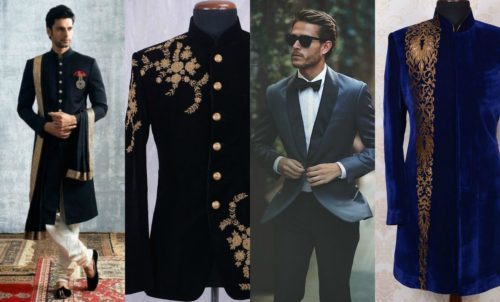
The reception is the post-wedding celebration — a grand evening event where the couple is formally introduced to a wider social circle. The reception dress code is glamorous, contemporary and often the most Western-influenced of all wedding functions. This is where the groom can switch silhouettes entirely — from the traditional sherwani of the ceremony to a sleek modern look.
Best outfit: A designer coat suit or tuxedo in deep solids — midnight navy, charcoal, black, deep wine — is the most popular groom reception choice. A Jodhpuri bandhgala in silk or velvet offers a fusion option that reads as both Indian and contemporary. An indo-western set with a structured jacket, inner kurta and tailored trousers creates a distinctive reception silhouette for grooms who want something beyond a standard suit.
Fabric: Fine wool blends or silk for classic coat suits. Velvet or brocade for Jodhpuri suits. Satin lapels and silk linings add luxury details. Lighter fabrics for summer receptions, heavier fabrics for winter evening events.
Styling tip: The reception is the function where accessories matter most — a designer watch, cufflinks, a silk pocket square, polished leather shoes and a subtle cologne complete the look. If the bride changes from her ceremony outfit to a cocktail gown or designer saree, the groom’s switch from sherwani to suit creates a visual transformation that photographs beautifully as a couple.
How to Coordinate Groom Outfits With the Bride and Groomsmen
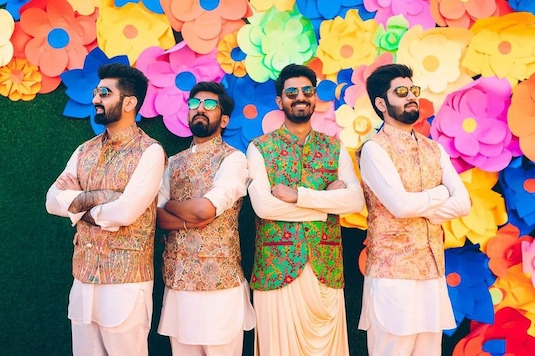
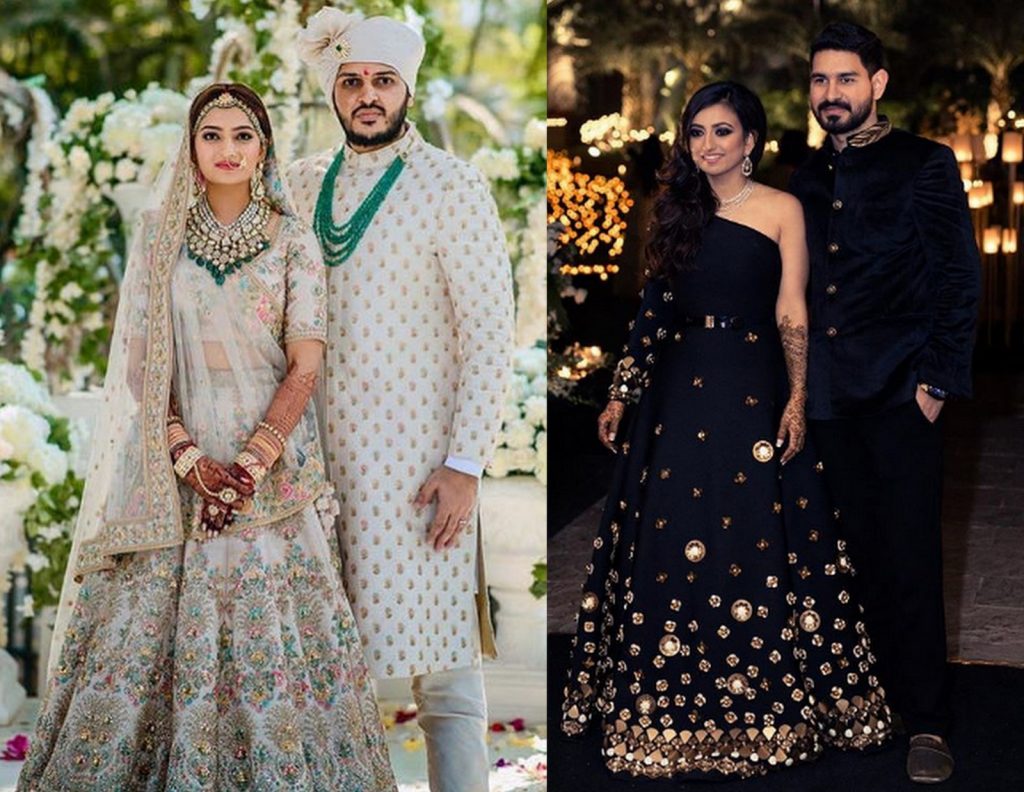
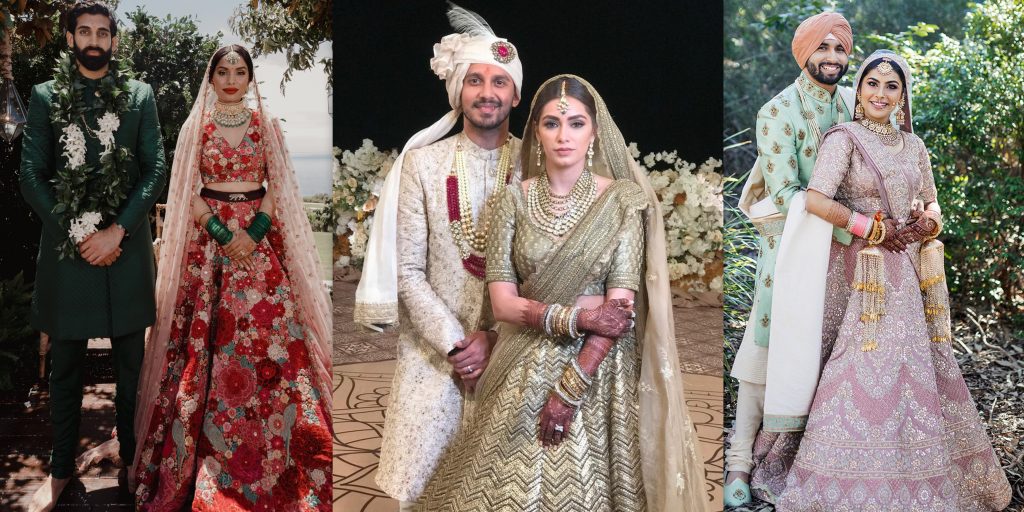
Coordinated outfits — between the groom and bride, and between the groom and his squad — are one of the strongest trends in 2026 wedding fashion. Planning coordination early in the shopping process ensures a cohesive visual story across all wedding photographs.
Coordinating With the Bride
There are three coordination approaches, each creating a different visual effect:
- Same colour match: Both wear the same shade — she in a maroon lehenga, he in a maroon sherwani. This creates the strongest visual unity and photographs most dramatically. Celebrity couples like Virat and Anushka used this approach at their wedding. Works best at the ceremony where the couple is photographed together most extensively.
- Complementary tones: Both wear colours from the same family but in different shades — she in deep red, he in champagne gold; she in dusty pink, he in ivory. This is the most popular approach because it allows individuality within a shared palette and avoids the “too matchy” look.
- Deliberate contrast: The bride and groom wear entirely different colour families that complement each other — she in red, he in teal; she in pink, he in sage green. This is the most fashion-forward approach and creates visually dynamic couple photographs. The key is ensuring the two colours harmonise rather than clash — cool tones with cool, warm with warm.
Coordinating With the Groomsmen
Groomsmen coordination has become a major trend in 2026. The most common approaches are: all groomsmen wearing the same colour Nehru jacket or bandhgala with individual kurta colours underneath, all wearing the same kurta colour with different waistcoat styles, or all wearing a single fabric (like matching brocade or silk) in slightly different shades. The groom should always stand out from his squad — through heavier embellishment, a different silhouette (sherwani vs the squad’s kurtas) or a deeper or lighter shade of the coordinated colour.
Frequently Asked Questions
How many outfits does the groom need for a full Indian wedding?
A typical Indian groom needs three to five outfits: a kurta pajama for haldi (the cheapest, most disposable piece), a waistcoat set or colourful kurta for mehndi, a designer statement piece for sangeet (coat suit, indo-western or jacket set), a sherwani for the main ceremony (the most significant investment), and a coat suit or blazer for the reception. The roka and engagement can share an outfit if they happen on different days, and the sangeet and reception outfits can overlap if you choose a versatile coat suit.
Should the groom spend more on the ceremony or reception outfit?
The ceremony sherwani should always be the biggest investment — it appears in the most important photographs, carries the greatest cultural significance and is the outfit the groom will be remembered in. The reception coat suit can be more affordable because its impact comes from fit and colour rather than heavy embellishment. A well-fitted off-the-rack coat suit in a strong colour can look as impressive as a designer sherwani at the reception.
Can the groom wear the same colour at multiple functions?
Never wear the exact same outfit at two functions, but wearing the same colour family in different silhouettes is acceptable and practical. For example, a champagne kurta for roka, a champagne waistcoat set for mehndi and a champagne sherwani for the ceremony creates a consistent personal brand across the wedding while still providing visual variety in photographs.
What should the groom’s father and brothers wear?
The groom’s father typically wears a formal sherwani or coat suit at the ceremony and reception, and a waistcoat set or embroidered kurta at pre-wedding functions. Brothers and close male relatives can coordinate with the groomsmen in matching or complementary outfits. The key rule is that no male family member should wear an outfit more elaborate than the groom — the groom’s ceremony sherwani should always be the most embellished piece in the room.
Every wedding function demands a different version of the groom — relaxed and colourful at haldi, vibrant and creative at mehndi, fashion-forward at sangeet, regal and traditional at the ceremony, and sleek and contemporary at the reception. Plan function by function, coordinate with the bride and your squad early, and invest most in the ceremony sherwani that will define your wedding memories. Start building your wardrobe with designer sherwanis, coat suits, kurta pajama sets, waistcoat sets and indo-western outfits. For the full wedding wardrobe checklist covering both bride and groom, read our Indian wedding outfit planning guide.