
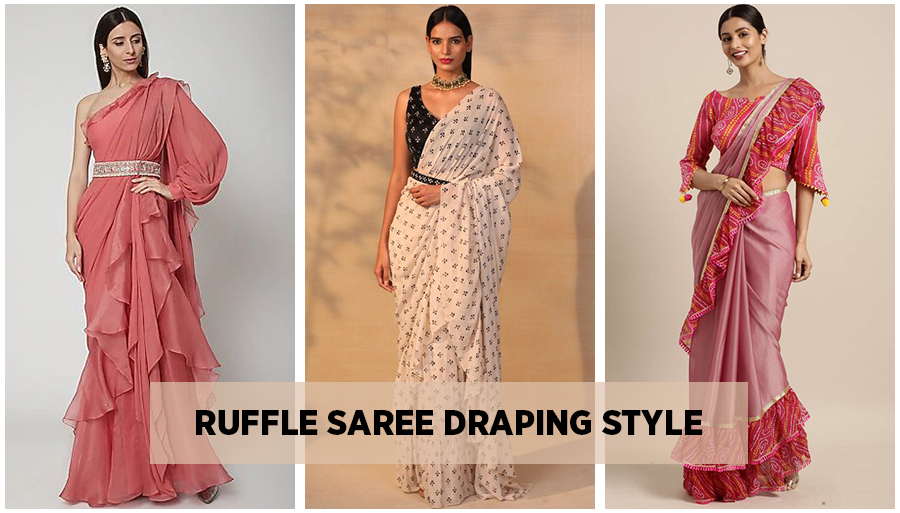
A ruffle saree is exactly what the name describes: a saree with frill or ruffle detailing added to the border, pallu, or body of the fabric. These ruffles create dimensional texture that a plain saree drape cannot produce, they move with the wearer, catch light differently from every angle, and give an otherwise simple drape a visually layered quality that reads modern, confident, and festive.
Ruffle sarees work across party, wedding, and reception contexts, and the five draping styles in this guide adapt the ruffle aesthetic to each occasion’s specific requirements. Each style changes how the ruffles sit and move on the body, choosing the right one for your specific saree’s ruffle placement (border, pallu, or all-over) makes a significant difference in how the final look reads.
What Fabric Works Best for a Ruffle Saree
Not all fabrics translate equally well into ruffle saree designs. The fabric determines how the ruffles hang, how much volume they create, and how well the drape holds through hours of wear. Understanding this before buying or draping is the single most useful piece of knowledge for getting a ruffle saree to look its best.
Georgette is the most widely used fabric for ruffle sarees and for good reason. Georgette sarees have a natural crinkled texture and a semi-sheer quality that creates ruffles with genuine volume and movement. The fabric’s slight weight holds the ruffle shape while remaining fluid enough to drape naturally. Best for: nivi style, belt style, and any draping approach that involves significant pallu movement.
Chiffon creates the softest, most delicate ruffles. Chiffon sarees with ruffle detailing are particularly beautiful for daytime and outdoor occasions where natural light passes through the semi-transparent fabric, creating an ethereal, layered effect. They require more careful pinning than heavier fabrics because chiffon shifts easily. Best for: handcuff tuck style, open palla style.
Net creates the most dramatic, structured ruffles. Net sarees with ruffle borders hold their shape very well because the stiff mesh fabric creates ruffles that stand away from the body rather than lying flat. This makes net ruffle sarees particularly impactful for evening events and receptions where visual presence from a distance matters. Best for: right shoulder drape, open palla style.
Organza sits between chiffon and net in terms of structure. Organza sarees with ruffle detailing create crisp, defined ruffles with a translucent quality that reads luxurious and contemporary. Best for: the handcuff tuck style and receptions where a structured yet light look is preferred.
Lycra and crepe are used for ruffle sarees that need to stay in place through dancing and active movement. The fabric’s stretch quality keeps the drape secure while the ruffles maintain their position. Best for: sangeet and high-energy party functions.
5 Ruffle Saree Draping Styles
Style 1: Nivi Drape: Classic Ruffle Saree Look
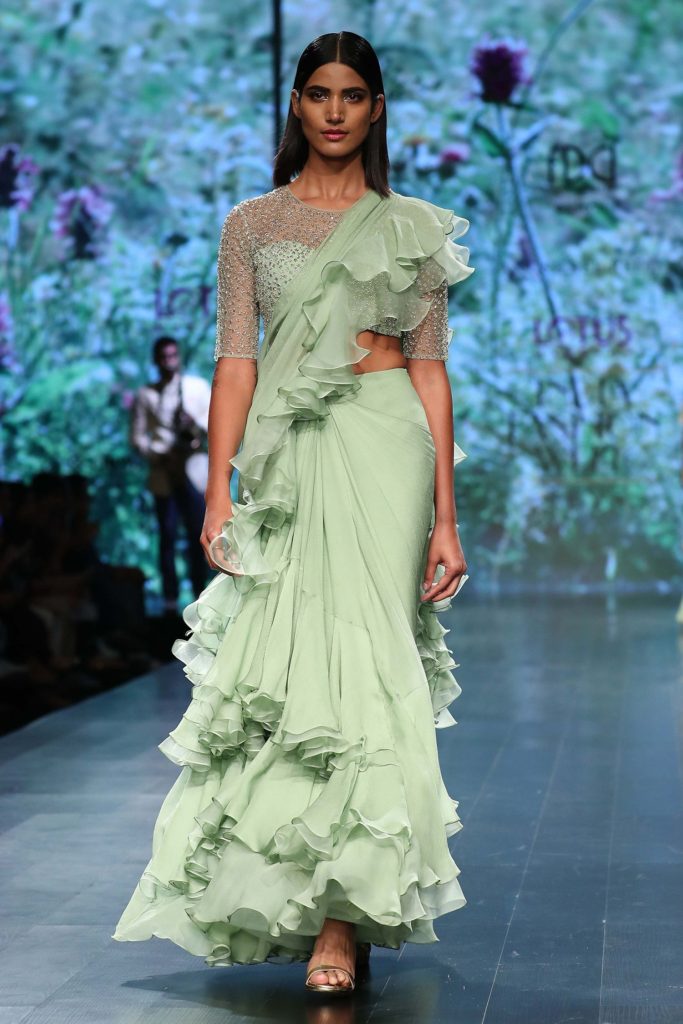
The nivi drape is the most universally worn saree draping style, and it translates into the ruffle saree context with ease. The ruffles along the border and pallu sit naturally at the shoulder and hem, creating a structured, layered visual that works across every occasion without requiring special draping technique. A solid pastel ruffle saree in the nivi style creates a look that is simultaneously traditional and contemporary.
A variation of the nivi drape involves pleating the pallu in an alternating up-down manner before placing it over the shoulder. This creates a fanned, cascading ruffle effect at the shoulder that adds additional visual depth to the standard nivi position.
Blouse pairing: A same-colour designer saree blouse creates a seamless, monochromatic look that lets the ruffle detailing be the focal point. Alternatively, a contrast-coloured blouse in a tone picked from the saree’s print or embellishment adds visual interest without competing with the ruffles.
Accessories: Minimal jewellery works best with the nivi ruffle style. The ruffles themselves provide enough visual texture that additional jewellery can easily overcrowd the look. A simple bangle and stud earrings are often sufficient.
Best occasions: All-day functions, daytime events, festive occasions.
Style 2: Belt Accentuated Ruffle Saree Look
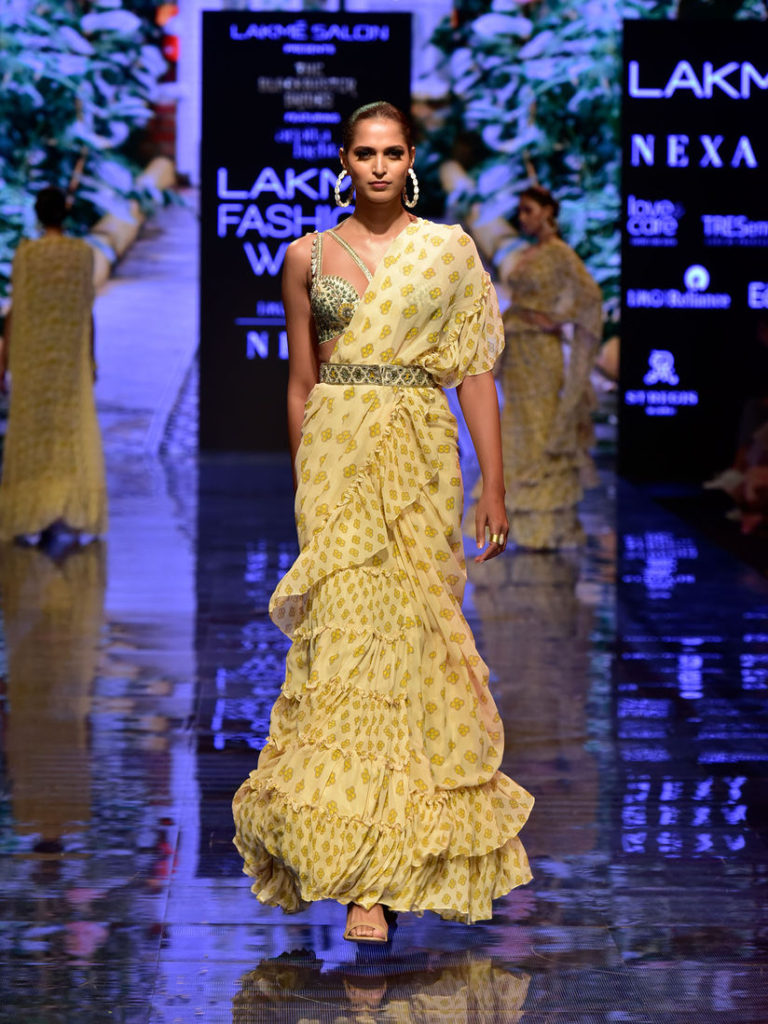
Adding a belt or kamarbandh over the waist of a ruffle saree drape is one of the most effective styling decisions you can make. The belt creates a defined waistline that anchors the flowing ruffle fabric, creating a structured hourglass silhouette within the saree’s natural volume. This single addition transforms a standard ruffle drape into something that reads deliberately styled.
For this style, choose printed sarees in flowy fabrics, floral prints, stripes, bandhani, or contemporary geometric prints all suit the belt-accentuated approach. The print adds visual movement at the body while the ruffles provide the texture at the border. The fabric must be flowy to create the natural draping fall that makes this style work: georgette, chiffon, and lycra are the most appropriate.
Blouse pairing: Sleeveless, strapless, or backless blouses complement this style best. The belt does the visual work at the waist, so the blouse can be minimal. A structured corset-style blouse in a contrast colour creates a particularly strong look.
Best occasions: Evening parties, cocktail events, receptions.
Style 3: Tuck Over the Handcuff: Contemporary Party Look
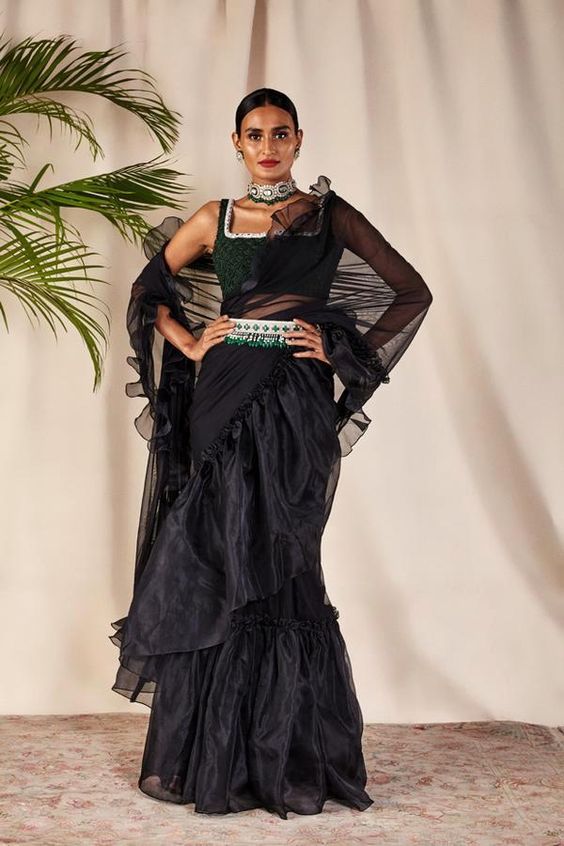
The handcuff tuck style drapes the saree around the shoulders and tucks the open end of the pallu over one arm at wrist level, using the arm itself as the securing point rather than a pin. The result is an unconventional, artful drape that reads fashion-forward and deliberately different from the standard shoulder drape. The saree material creates a flowing wing-like effect from the arm, and the ruffles at the pallu edge are fully displayed from this position.
This style works best with lighter fabrics that hold the tuck naturally without excessive weight pulling the drape out of position. Organza sarees with ruffle detailing are particularly effective here, the fabric’s slight stiffness holds the dramatic arm drape while the organza’s translucent quality creates a luminous, layered effect under evening lighting.
Blouse pairing: A contrasting blouse with minimal embellishment keeps the focus on the unconventional drape. Full-sleeve, half-sleeve, and sleeveless blouses all work in this style, the key is that the blouse should not visually compete with the saree’s dramatic positioning.
Best occasions: Night parties, receptions, contemporary events where a non-traditional saree look is appropriate.
Style 4: Right Shoulder Reverse Drape
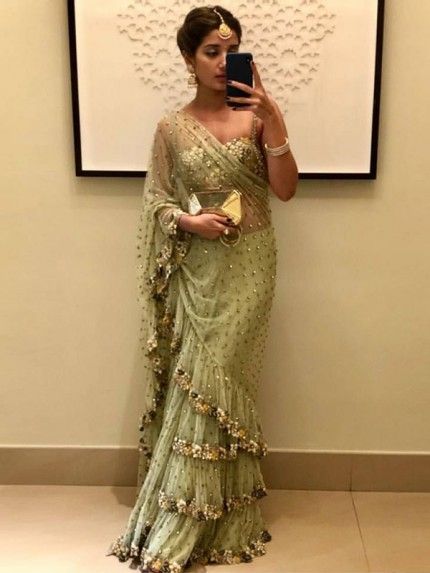
The right shoulder reverse drape places the pallu over the right shoulder rather than the standard left, a seedha pallu style for ruffle sarees. This positioning shifts the ruffle display to the right side of the body, creating a visual asymmetry that is visually interesting and contemporary. The pallu is held at the elbow with a safety pin rather than at the shoulder, allowing the ruffle edge to cascade freely from the arm.
Net ruffle sarees suit this style particularly well because the structured net fabric holds the right-shoulder drape firmly in position without constant adjustment. An embellished net ruffle saree in this draping style creates a look that reads glamorous and fashion-aware. For a deeper understanding of reverse and seedha pallu draping approaches, read our pleated pallu saree draping guide.
Blouse pairing: If the net ruffle saree is embellished, choose a bustier blouse, sleeveless style, or halter-neck blouse that complements the saree’s glamour without overwhelming it. The right-shoulder drape exposes the left shoulder and arm, making a sleeveless or off-shoulder blouse particularly effective for this style.
Best occasions: Evening weddings, reception events, fashion-forward parties.
Style 5: Open Palla Style: Wedding and Bridesmaid Look
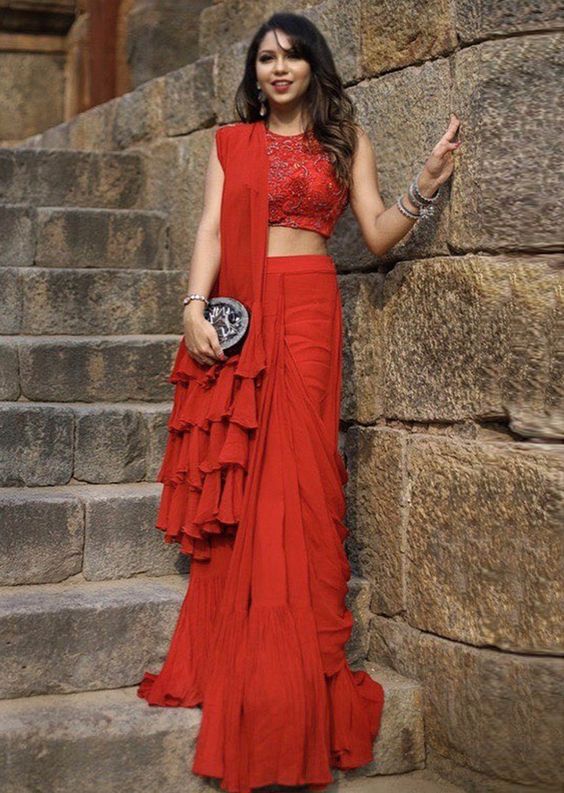
The open palla style is the most wedding-appropriate of the five ruffle saree draping approaches. All the front pleats are gathered and pinned together to create a deep cowl effect at the side, while the pallu is placed over the right shoulder and left open at the front, allowing the ruffled pallu edge to fall freely and display fully. This style works particularly well when the ruffle detailing is concentrated at the pallu section rather than distributed throughout the saree.
For bridesmaid or wedding guest occasions, a red saree with ruffle detailing in this style is a bold, photographically strong choice that reads festive and occasion-appropriate. Deep cowl front pleats paired with an open ruffled pallu at the right shoulder creates a silhouette that is distinctive from conventional wedding saree draping while remaining within appropriate register for formal functions.
For the full range of wedding sarees that work in the open palla draping style, choose sarees where the pallu embellishment is concentrated and visually substantial, the open palla display makes the pallu the primary visual element, so it must have enough detail to carry that attention.
Blouse pairing: Drop earrings and bangles or bracelets complement this style at wedding functions. A structured blouse with embellishment at the neckline works particularly well when the open pallu draws attention to the upper body area.
Best occasions: Indian weddings, formal functions, bridesmaid occasions.
Watch: Ruffle Saree Draping Tutorial Step by Step
The video below demonstrates how to drape a ruffle saree in each of the styles covered above, including the handcuff tuck and the right shoulder reverse drape which are the most technically different from standard saree draping.
Ruffle Saree for Different Occasions
Evening parties and cocktail events: The belt accentuated style and the handcuff tuck both read strongly for evening parties. The belt style creates a defined, polished silhouette appropriate for indoor cocktail settings, while the handcuff tuck is the most overtly fashion-forward option for events where personal style expression is expected. Party wear sarees in ruffle georgette and net suit these contexts best.
Wedding functions and receptions: The open palla style is the strongest choice for Indian weddings, particularly for bridesmaids and wedding guests who want a saree look that is distinctive without upstaging the bride. The right shoulder drape works well for receptions where a glamorous, contemporary saree look is appropriate. Reception sarees in embellished net or structured organza with ruffle detailing are the most visually impactful options for formal evening events.
Festive and daytime occasions: The nivi style and the belt accentuated style both suit daytime festive functions. A pastel ruffle saree in the classic nivi drape reads festive and occasion-appropriate without the full glamour weight of an evening look. Choose lighter fabrics, chiffon and georgette, for daytime comfort.
For more ideas on how to style sarees for specific wedding functions, read our saree styling guide for mehendi and sangeet.
Blouse Styles for Ruffle Sarees: By Draping Style
The blouse choice for a ruffle saree matters more than for a plain saree because the ruffle detailing already creates significant visual complexity. The blouse should either complement the ruffle aesthetic with matching material or contrast it cleanly with a minimal, sleek design.
For the nivi and open palla styles, a same-fabric or same-colour blouse creates a cohesive look that does not fight with the ruffle detailing. A short-sleeved or full-sleeved blouse in the saree’s base colour allows the ruffles to remain the focal point. For embroidered sarees with ruffle detailing, a plain blouse in a complementary tone is the cleaner pairing.
For the belt, handcuff, and right shoulder styles, a backless, strapless, or halter-neck blouse adds a contemporary edge that suits the unconventional character of these draping approaches. Sequin sarees with ruffle detailing particularly benefit from a structured, minimal blouse that lets the embellishment read clearly.
For all draping styles, avoid heavily embroidered or printed blouses that compete with the ruffle texture. The ruffles are the statement, the blouse supports rather than competes with them.
Frequently Asked Questions: How to Wear a Ruffle Saree
What fabric is best for a ruffle saree?
Georgette is the most widely recommended fabric for ruffle sarees because it creates ruffles with natural volume and fluid movement. Chiffon creates softer, more delicate ruffles suited to daytime occasions. Net creates structured, stand-away ruffles that photograph dramatically under event lighting. Organza creates crisp, defined ruffles with a translucent quality. The right fabric depends on the occasion and how pronounced you want the ruffle effect, georgette and chiffon for daytime and casual events, net and organza for evening and formal functions.
How do you drape a ruffle saree step by step?
The basic method follows the standard nivi drape: start by tucking the plain end at the right waist, wrap once around the body, make the front skirt pleats, tuck them into the waistband at the centre front, then bring the pallu over the left shoulder. For ruffle sarees specifically, pre-aligning the ruffled pallu before placing it over the shoulder creates a cleaner, more intentional final position. Watch the video tutorial in this post for a complete step-by-step demonstration of all five draping styles. For a detailed guide to pallu pleating techniques, also read our pallu draping styles guide.
Can a ruffle saree be worn at a wedding?
Yes. The open palla draping style and the right shoulder reverse drape are both appropriate for Indian wedding functions as a guest or bridesmaid. Net ruffle sarees and embellished georgette ruffle sarees in deep jewel tones or bridal colours like red and maroon read appropriately for wedding occasions. Avoid very casual prints or lightweight fabrics for main ceremony functions, choose structured net or silk-based ruffle sarees for formal wedding contexts.
Which blouse looks best with a ruffle saree?
The most versatile blouse choice for a ruffle saree is a sleeveless blouse in a matching or contrast colour with minimal embellishment. For the belt style, a structured corset or backless blouse creates a contemporary pairing. For the open palla style, a blouse with neckline detailing works well. The general rule is to keep the blouse visually simpler than the saree, the ruffles provide the statement, the blouse should complement rather than compete.
Are ruffle sarees suitable for short or petite women?
Ruffle sarees work well for petite women when draped in the nivi or belt style, where the vertical line created by the front pleats and the belt’s horizontal accent creates the illusion of height. The narrow pleated nivi style specifically elongates the silhouette. Avoid heavy all-over ruffle sarees that add horizontal volume, sarees where ruffles are concentrated at the border or pallu rather than distributed throughout the body create a cleaner, more elongating effect. For more saree styling advice for different body types, see our unique saree draping styles guide.
Shop Ruffle Sarees at G3Fashion
The ruffle saree’s versatility across five different draping styles means one saree can create completely different looks for different occasions, from a classic nivi at a daytime function to a right-shoulder glamour drape at an evening reception. The fabric you choose determines the character of the ruffles, and the draping style determines the silhouette. Match both to the occasion and the look comes together naturally.
🇮🇳 Shop Sarees. India |
🇺🇸 USA |
🇬🇧 UK